
-
Rogue Company Cheats — Undetected Aimbot, ESP & Wallhack Built for Third-Person Combat
194 concurrent players. Zero patches. One kernel driver still scanning. Rogue Company cheats with silent aimbot, skeleton ESP, and per-tier recoil compensation through every Demolition round. Rogue Company hacks running undetected beneath EAC while Hi-Rez runs silent.
-
Featured Products
-
-
Rogue Company plays like nothing else on the market — a third-person tactical shooter where you skydive from The Chimera into 4v4 Demolition rounds, buy weapons and upgrades between rounds with earned cash, and fight with character abilities that no two Rogues share. Lancer reloads on dodge roll. Saint revives teammates from across the map with a drone. Scorch sets enemies on fire with every bullet. The SL-C melts faster than any SMG in the genre, and the KA30 handles differently at Tier 1 than it does with a Tier 3 suppressor because the upgrade system changes recoil mid-match.
Hi-Rez dissolved First Watch Games and stopped patching the game entirely. Steam averages 194 concurrent players. The cosmetic shop still processes transactions. Nobody knows when the servers shut down — including, apparently, Hi-Rez. What didn’t stop is EasyAntiCheat. EAC runs at kernel level on every RoCo launch, scanning memory and fingerprinting hardware through Epic Games’ centralized infrastructure. Detection signatures update independently of game patches. The developer left. The anti-cheat didn’t.
This guide covers how Rogue Company cheats interact with the game’s third-person combat system, how each feature adapts to Demolition and Strikeout, what EAC actually catches in a maintenance-mode environment, and why a hardware ban in RoCo costs you every EAC game on your machine.
Rogue Company Aimbot — Third-Person Lock-On Without the Camera Snap
You shoulder-swap around the Breach B-site pillar with the SL-C drawn. The enemy Lancer dodge-rolls left — her passive reloads the weapon mid-roll, and she’s firing before her feet touch the ground. Your crosshair doesn’t flinch. The bullet trajectory adjusts at the server level, connecting three chest shots through her dodge animation without your camera moving a pixel.
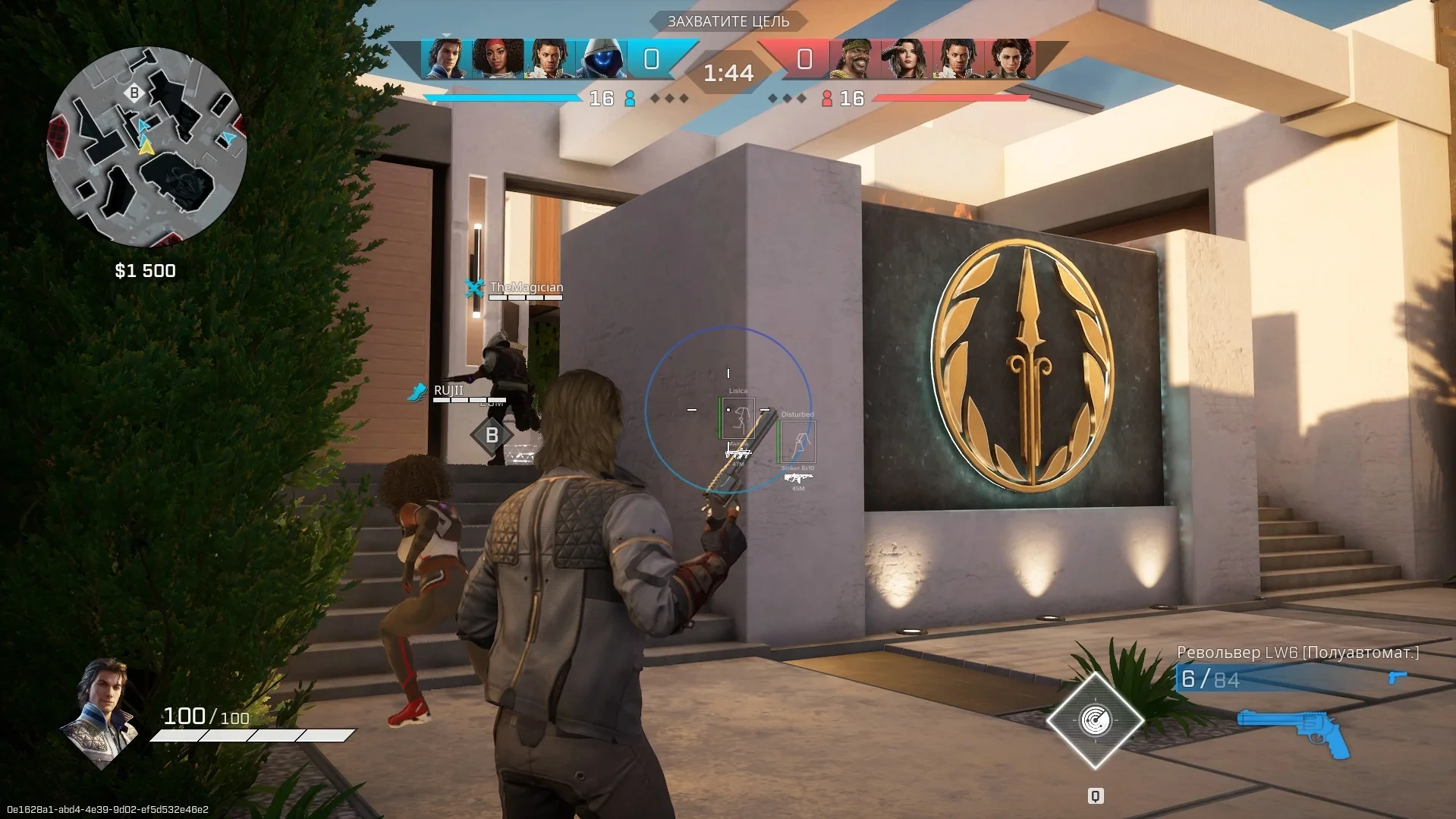
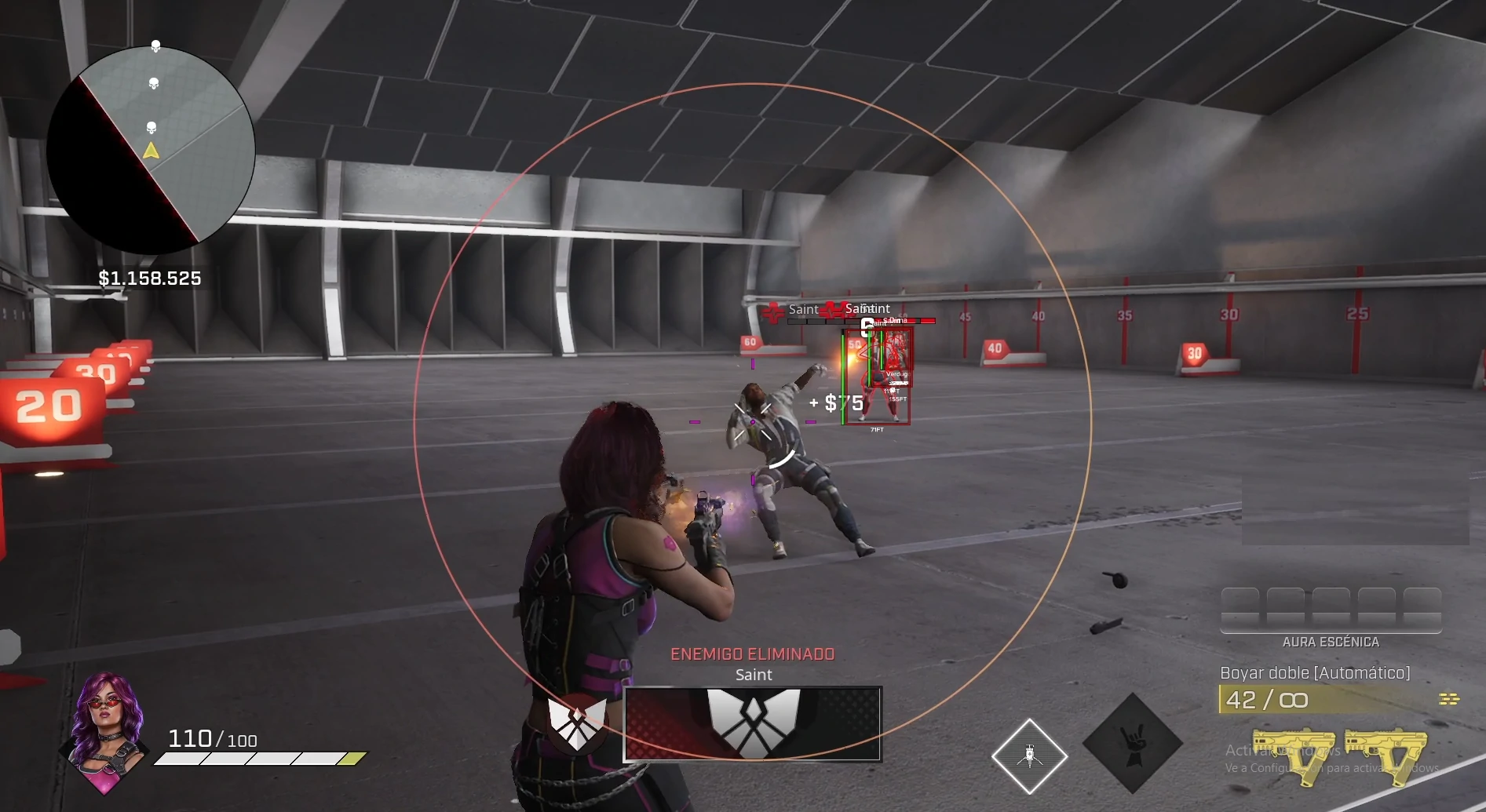
Rogue Company aimbot targets enemy Rogues through the over-the-shoulder third-person camera with adjustable FOV, bone selection, and visible-check filtering. Silent aim corrects bullet trajectory server-side without moving the crosshair — critical in a TPS where camera snapping is immediately visible to anyone spectating your match or watching killcam replays.

Silent Aim in Third-Person — Why Camera Separation Matters
First-person shooters hide aim corrections behind the player’s own viewmodel. Rogue Company’s third-person camera floats behind the character — your teammates and spectators watch your crosshair from the outside. Snap-to-target aimbot in this perspective is the visual equivalent of a neon sign. Silent aim solves this by correcting at the bullet level, not the view level. Your crosshair stays on the doorframe. The round still hits the Ronin behind the wall because the trajectory bends after the muzzle.
Visible-check adds another layer: it won’t lock onto the Phantom crouching behind the High Castle turret unless you’d have line of sight without assistance. EAC’s spectator replay flags impossible angles. Visible-check keeps yours within what the game engine considers legal geometry. Overwatch 2’s first-person aimbot approach handles this differently — there’s no shoulder camera to betray the lock-on.
FOV and Aim Bone Selection
FOV at 30° limits targeting to enemies already near your crosshair — tight enough to look natural in killcam, wide enough to catch a Chaac popping around a Factory doorframe. Bone selection defaults to chest for consistency. Headshot multiplier in Rogue Company is a flat 1.5x across all weapons, so chest-locking with the KA30 still drops most Rogues in four hits without triggering the statistical anomaly of a 90% headshot rate.
Demolition rounds demand tighter settings. Single-life means every trade counts, and the killcam plays for the entire team. Strikeout respawns give you room to widen the FOV to 50° — the constant action buries individual kill analysis in volume.
Rogue Company ESP — Reading the Lobby When Matchmaking Won’t
Matchmaking puts a Diamond three-stack against two bots and a level 8. You know the outcome before The Chimera opens its bay doors. The skill gap in a maintenance-mode lobby isn’t something practice fixes — it’s a population problem. Fewer players means wider skill brackets, and the system stopped caring about balance the same week Hi-Rez stopped caring about patches.
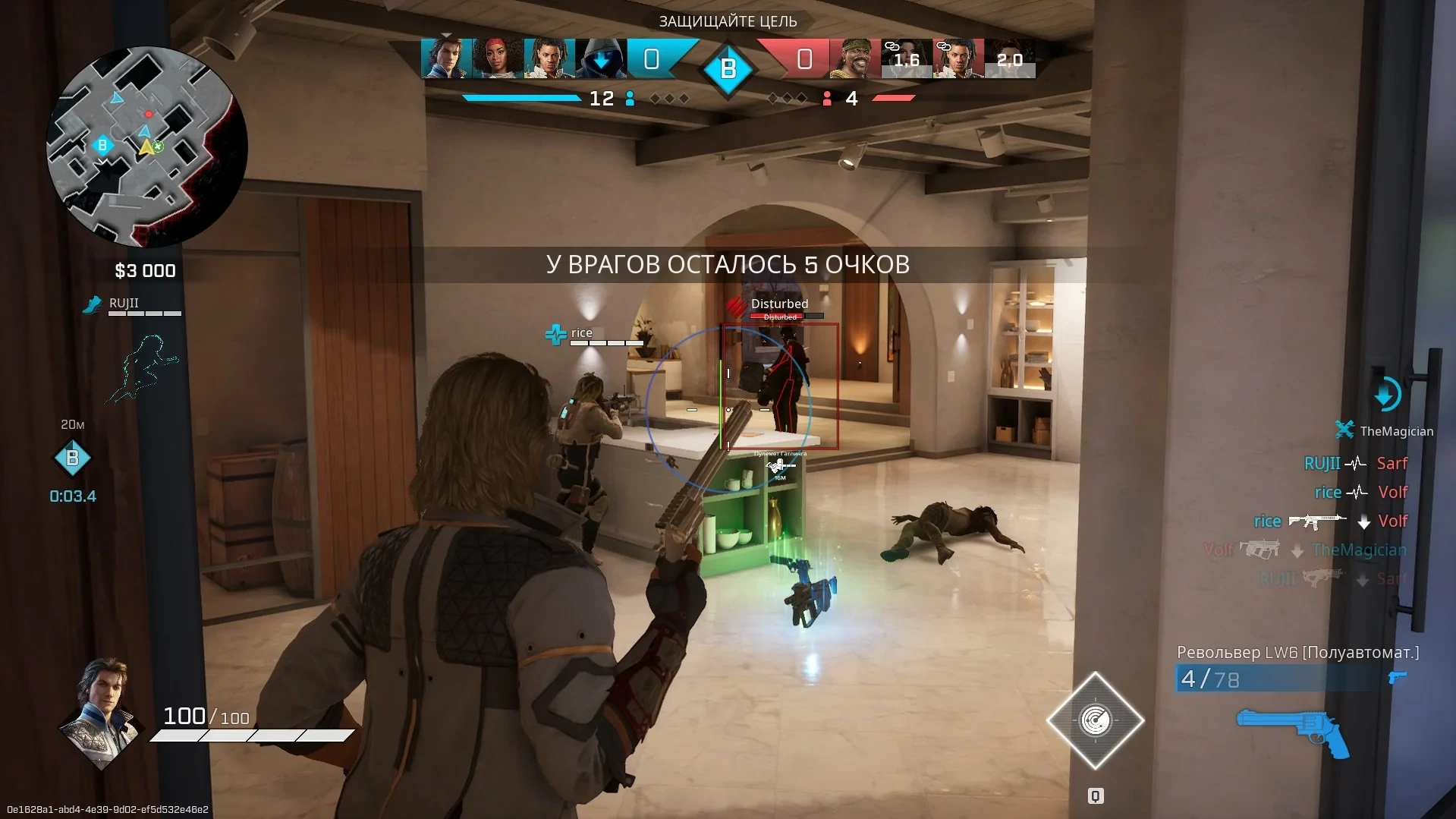
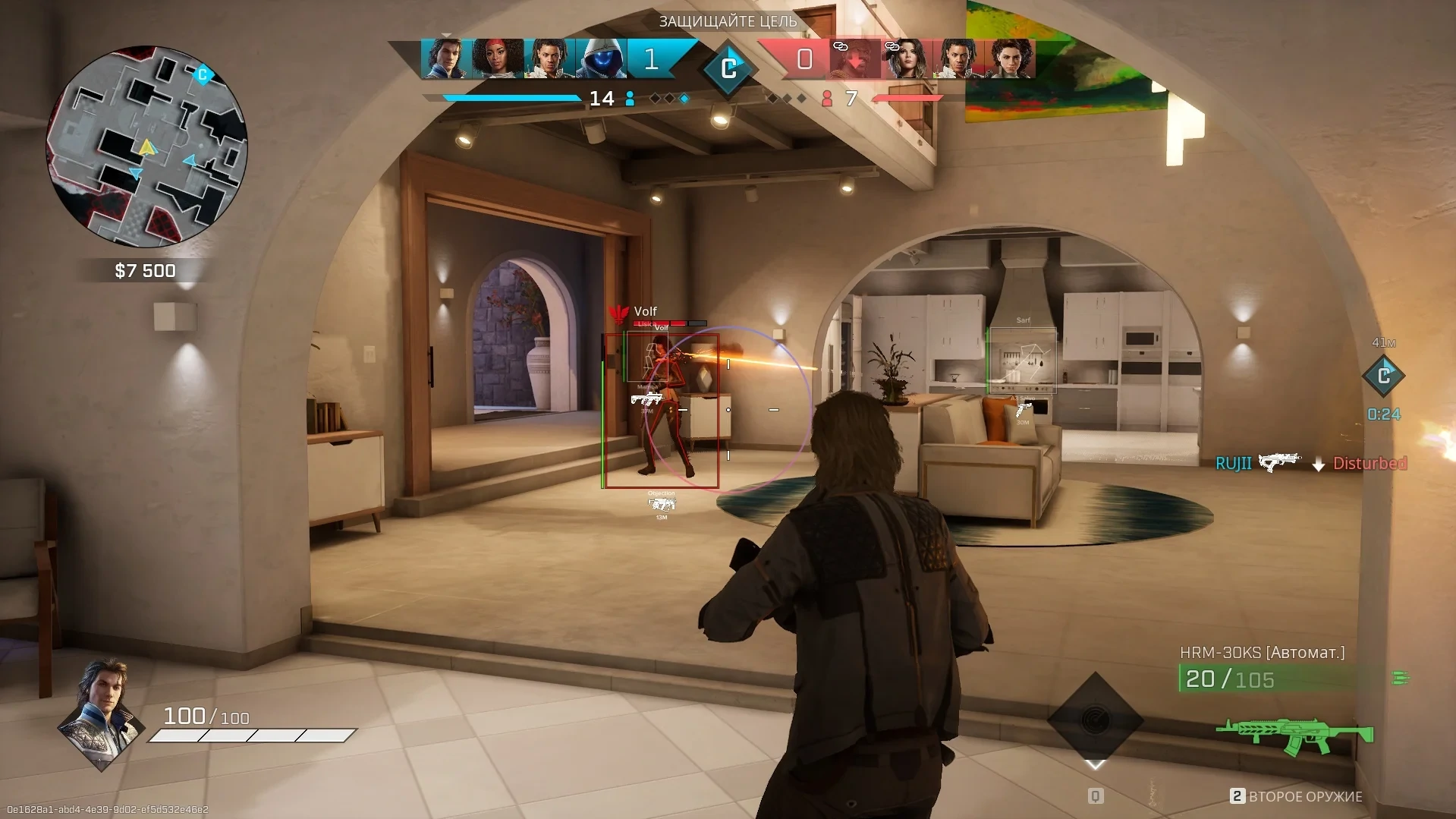
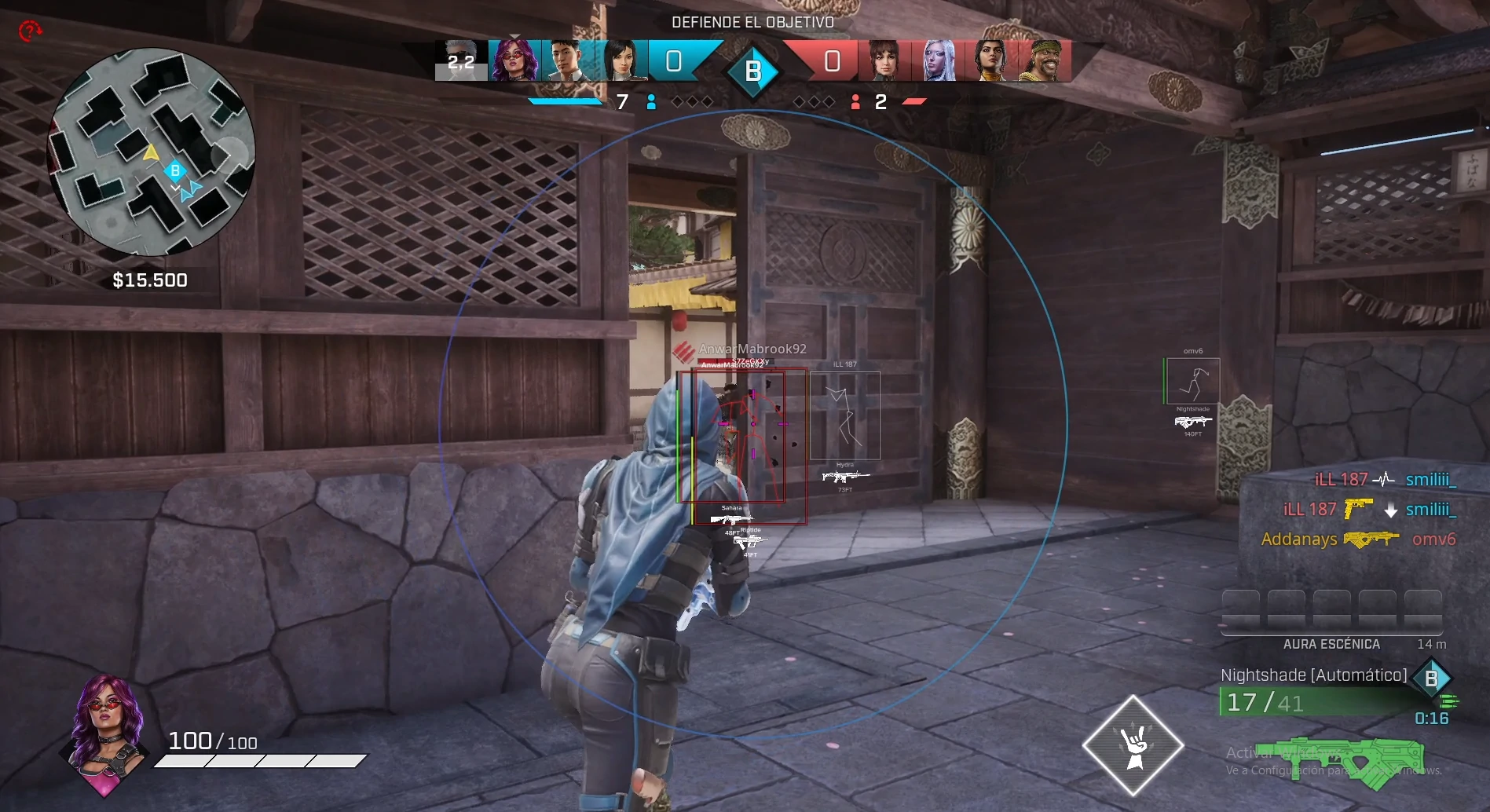
Rogue Company ESP overlays enemy positions, health bars, Rogue names, and active ability cooldowns through every wall and surface on the map. Skeleton rendering tracks character models in real time — showing dodge roll animations, revive attempts, and weapon swap timings that the third-person camera can’t catch around corners or through floors.
Entity Filter — Rogues, Gadgets, and Planted Bombs
Demolition ESP needs surgical precision. Filter to players and the planted bomb — nothing else matters in a single-life round where the defuse timer decides everything. Seeing the bomb through three walls of Lockdown’s interior lets your team rotate before the plant sound even reaches your position. Knowing whether Dahlia already used her Danger Close link tells you if the downed enemy is getting revived from across the map or bleeding out permanently.
Strikeout filters shift toward the Hill marker and respawn tracking. Knowing where eliminated enemies respawn lets you pre-aim the lane they’ll push — Strikeout spawns are predictable on maps like Windward and Vice, and the overlay confirms the pattern every time. Apex Legends ESP with legend ability tracking handles a similar challenge in a different format — both games tie visibility to character-specific cooldowns.
Rogue Company ESP Stream Proof — Overlay Visibility Controls
RoCo’s Twitch presence barely hits 40 average viewers, but stream proof isn’t about Twitch numbers. The remaining community runs Discord tournaments where admin spectating is standard. Screen-sharing in Discord voice calls is how most RoCo squads coordinate. The overlay renders on your monitor but not in any capture software — OBS, Discord stream, Shadowplay, none of them pick it up. If an admin spectates your Ranked Demolition match, the only thing they see is a player who rotates well.
How EAC Protects a Game Nobody’s Updating
EAC loads as a kernel driver before the Rogue Company process initializes. Ring 0 access — same privilege level as your GPU driver. It reads process memory, scans for injected code signatures, verifies game file integrity, and fingerprints your hardware on every launch. Standard anti-cheat architecture. What makes RoCo’s situation unusual has nothing to do with how EAC works and everything to do with who maintains it.
EasyAntiCheat’s detection signatures update through Epic Games’ centralized infrastructure, not through Hi-Rez’s development team. When First Watch Games was dissolved and the Rust’s EAC implementation received a new signature push, Rogue Company received the same push. The kernel driver doesn’t know the game behind it lost its developers. It loads the same way regardless.
What EAC Still Catches — And What Slipped Through the Cracks
The automatic layer works. EAC’s signature database keeps expanding because Epic maintains it for Fortnite, Apex, and every other EAC title simultaneously. A detection method developed for The Finals’ active EAC investment propagates to Rogue Company without anyone at Hi-Rez lifting a finger.
The manual layer is a different story. Hi-Rez developers confirmed using “many other backend tools” alongside EAC — proprietary server-side behavioral analysis that flagged suspicious aim patterns and movement data. That backend hasn’t had a human maintaining it since the team was dissolved. The behavioral heuristics still run, but nobody’s tuning the thresholds or reviewing edge cases.
The result is a two-speed detection system. The kernel-level scan stays current because Epic has financial incentive to maintain it globally. The game-specific analysis layer is frozen at whatever state Hi-Rez left it in. That gap matters — and anyone telling you EAC “stopped working” for RoCo is confusing the two layers. Check the current detection status for every supported game for real-time data instead of Steam forum speculation.
Rogue Company Wallhack — Every Angle the Third-Person Camera Misses
Third-person gives you more vision than any FPS. You peek corners without exposing your hitbox. You shoulder-swap to check both sides of a doorframe before committing. That advantage disappears the moment vertical geometry enters the equation. High Castle’s three-floor castle interior stacks teams on top of each other with no horizontal sightline to exploit. Skyfell’s glass-floor atrium creates angles where the TPS camera shows you nothing but ceiling tiles while an enemy aims down through the floor.
Rogue Company wallhack renders enemy player models through walls, floors, and environmental cover across all maps. Combined with the third-person camera’s natural peek advantage, wallhack eliminates the remaining blind spots — stacked doorways on Breach, multi-floor rotations on Hollows, and smoke-covered bomb sites where Phantom’s Nano Smoke reveals enemies inside but wallhack reveals everyone outside it too.
Map Geometry That Breaks the Camera — High Castle, Skyfell, Breach
High Castle is the worst offender. The castle interior has three floors connected by a single staircase and two ziplines. A Trench sitting on the second floor with Barbed Wire at the stair entrance can hold indefinitely against a team pushing from below — unless the pushing team knows exactly where the wire is and which angle Trench is holding. Wallhack renders Trench’s model through the floor, the wire gadget through the wall, and the Anvil crouching behind the Barricade at the top of the zipline exit.
Skyfell creates a different problem. The tower section gives snipers a dominant position over both bomb sites, but the elevator shaft and glass walkways produce dead zones where the TPS camera clips into geometry and returns nothing useful. Knowing whether the enemy Fixer is scoped at the tower window or has rotated to the ground floor changes your entire approach. On Breach, the B-site pillar stacks are intentionally designed to create close-range chaos — multiple Rogues can occupy a 10-meter radius with zero visibility on each other. Wallhack turns that chaos into a sequence of predictable targets.
Recoil Compensation — Weapon Tiers Change the Pattern
Rogue Company no recoil compensates for weapon-specific vertical and horizontal kick patterns, adjusting automatically across the three upgrade tiers. A KA30 at Tier 1 has different recoil behavior than the same KA30 at Tier 3 with a suppressor attached. The compensation system tracks which tier you’re currently running and adapts — no reconfiguration between rounds, no manual profile switching when you buy an upgrade.
Per-Weapon Recoil Profiles — ARs, SMGs, and the SL-C Problem
The SL-C is the poster child for this. Tier 1 SL-C has aggressive horizontal scatter that throws rounds left and right past the third shot. It’s Rogue Company’s highest-DPS SMG, but half the magazine misses at 12 meters without perfect stick control. Tier 3 SL-C tightens the spread dramatically — it’s a different weapon. Players who buy Lancer or Scorch specifically for SL-C access know the difference between early-round and late-round SL-C handling. Recoil compensation knows the difference too.
The KA30 is more forgiving. Moderate vertical climb across all tiers, predictable enough that most veterans can control it manually. The value of compensation on the KA30 shows at range — cross-map engagements on Vice or Windward where even small vertical drift pushes rounds above a head-sized target. The HRM-30KS hits harder per shot but kicks more aggressively, and its Tier 3 suppressor changes the recoil profile substantially. Compensation keeps every round chest-level regardless of which tier you’re buying into.
Demolition economy makes this matter more than it would in a loadout shooter. Round 1 is pistol-only or a Tier 1 primary if you invest everything. Round 3 you might have Tier 2. Round 5, full Tier 3 with suppressor. Each round your weapon handles differently. Compensation tracks the shift silently.
Rogue Company Hacks — Playing Demolition and Strikeout With Full Information
Strikeout round 1. The Chimera drops you onto Windward. Every player has $12,000 and a full buy available immediately. Your Scorch runs a Tier 3 SL-C before a single shot has been fired. Overheat sets the first enemy on fire through the Hill doorway and the SL-C finishes the job in under a second. Respawn timer ticks. The next enemy pushes from the same lane because Strikeout spawns on Windward funnel toward the Hill from two predictable angles. ESP confirms the spawn. Aimbot handles the trade.
Demolition and Strikeout require different approaches. Demolition’s single-life economy rewards cautious play — ESP for positional intel, silent aim for guaranteed trades when you commit. Strikeout’s unlimited respawns and full starting cash reward aggression — wider aimbot FOV, maximum ESP render distance, less concern for killcam scrutiny because the pace buries individual plays in volume.
Ranked Draft Pick Strategy — Knowing Their Rogues Before the Round
Ranked Demolition adds the draft pick system. Four bans, alternating picks, no duplicate Rogues. You know the enemy team composition before round 1 starts. If they drafted Phantom and The Fixer, two snipers are watching lanes. If they picked Saint and Dahlia, double-revive capability means DBNO finishes become mandatory — downing without finishing wastes the trade entirely. Valorant’s tactical economy and ranked draft creates a similar pre-round information layer, but RoCo’s third-person perspective means that pre-knowledge translates into completely different engagement patterns.
ESP confirms positions once the round starts, but the draft gave you strategy before anyone hit the ground. Knowing they have Saint means the Revive Drone is available from any distance — your aimbot needs to finish the down, not just secure it. Knowing they banned Lancer means their flanking options are limited. The draft is information. ESP validates it in real time.
HWID Spoofer — Why EAC Bans Hit Every Game You Own
EAC’s kernel driver reads your motherboard serial, HDD and SSD identifiers, GPU serial, CPU serial, RAM serial, MAC address, and Windows Machine GUID on every launch. That’s not a Rogue Company feature — it’s EAC standard behavior across every title in its ecosystem. The fingerprint enters a global database maintained by Epic Games. A flag in one game is a flag in all of them.
An EAC hardware ban in Rogue Company blocks your hardware fingerprint across every EAC-protected title on your machine. A detection in a Strikeout lobby at midnight cascades to your Rust account the next morning — same motherboard serial, same EAC database. The RoCo tools cost a few dollars. The Rust account has three thousand hours on it. That’s the real math.
Cross-Game Ban Propagation — The EAC Global Database
The spoofer initializes before EAC’s kernel driver loads. It intercepts the hardware identifier queries and returns randomized serials — your real motherboard ID, drive serials, and MAC address never reach EAC’s collection layer. The process repeats on every launch with different randomized values.
Rogue Company is an EAC game that shares its anti-cheat infrastructure with Fortnite, Apex Legends, Rust, Dead by Daylight, The Finals, and every other EAC title. Getting flagged in RoCo doesn’t just end your RoCo sessions. It ends everything on that hardware. The spoofer doesn’t protect a three-dollar product. It protects every other account tied to your machine.
Still Worth Loading Into — Getting Started Before the Servers Go Dark
The question every RoCo player asks before investing anything: is this game shutting down tomorrow? Hi-Rez hasn’t announced a shutdown. They haven’t announced anything. The cosmetic shop still processes transactions. The servers still matchmake. The only honest answer is nobody knows — not the community, not the remaining Hi-Rez staff, probably not even the accounting department that decides whether the server bill is worth paying.
Here’s what is concrete. The entry cost is the lowest on the site. No season pass to chase. No ranked reset creating urgency. No meta shifts requiring adaptation. RoCo is frozen in its last balance state — every setting you configure stays valid until the lights go out. That stability is unusual. Most games force constant recalibration. This one doesn’t because nobody’s patching it.
Setup runs through the same process as every other EAC title. DMA hardware users connect the second machine, load the memory reader, and launch RoCo normally — EAC sees a clean hardware fingerprint. Software users follow the Discord setup channel. Questions about third-person FOV calibration, Demolition-specific settings, or per-weapon recoil profiles get answered in the same support channels that cover every other game on the roster.
The full Rogue Company product details and feature breakdown are on the store page. Everything covered in this article — silent aimbot, ESP with Rogue ability tracking, wallhack, recoil compensation, HWID spoofer — is part of the package.
Rogue Company Cheats — FAQ
I keep hearing EAC stopped updating for Rogue Company since Hi-Rez fired the dev team — is that true?
EAC’s detection signatures come from Epic Games’ centralized infrastructure, not from Hi-Rez’s development team. The kernel driver receives signature updates independently of Rogue Company patch cycles — new detection methods developed for Fortnite or Apex propagate automatically. Hi-Rez’s proprietary backend behavioral analysis tools have likely degraded without active maintenance, but EAC’s core scanning layer stays current because Epic funds it globally.
My Demolition lobby has two bots and a level 500 on the other side — does ESP even help when matchmaking is this broken?
ESP compensates for matchmaking dysfunction by giving you information parity regardless of team composition. Against the level 500, you see their rotation through walls before they commit — positional advantage narrows the skill gap faster than raw aim improvement. Knowing their Phantom is repositioning to the Skyfell tower sniper lane gives you time to rotate before the LR15 Fullbody scopes in. Information replaces reaction time.
The SL-C handles completely differently at Tier 1 versus Tier 3 — does no recoil adjust for upgrade levels mid-match?
Yes. Recoil compensation tracks the active weapon tier and adjusts automatically. The SL-C’s horizontal scatter at Tier 1 requires different compensation than the Tier 3 version with tightened spread. The system detects which upgrade tier the weapon is running and applies the corresponding recoil profile. No reconfiguration between rounds when you buy upgrades.
I got hardware-banned from Rogue Company and now my Rust account says EAC banned too — are EAC bans really cross-game?
EAC bans are global. The hardware fingerprint flagged in Rogue Company enters EAC’s central database — every EAC-protected game on that hardware sees the same flag. Fortnite, Apex Legends, Rust, Dead by Daylight, The Finals, all of them. An HWID spoofer prevents your real hardware identifiers from reaching EAC’s collection system, keeping the global database clean.
Is there any point running stream proof in Rogue Company when the game barely has viewers on Twitch?
Stream proof prevents the overlay from appearing in any screen capture — Discord screen share, OBS recordings, Shadowplay clips, and admin spectate tools. RoCo’s remaining community runs private Discord tournaments and custom lobbies where spectating is standard practice. If an admin spectates your Ranked Demolition match, stream proof ensures they see a player with good game sense, not an overlay rendering enemy positions through walls.
-
-
Total Members 4,999
-
Most Online 39
-
Newest Member johseff.johseff

-
-
Reviews
-

By Discord Review · Posted
+rep @admin really fast support and noce cutom service the delivery speed was fast he helped me with the settings you need to change an do and that in 10 min thats crazy. -

-

By 3ttuu · Posted
My firmware is working perfectly thanks to the kind explanations and help from the Burger Cheat admin. They were always very friendly and responded quickly to customers. If you're considering a purchase, I highly recommend it -
By Discord Review · Posted
+REP. The response was fast, the explanations were kind, and they answered my questions sincerely and thoroughly. It was excellent. -

-