
-
Call of Duty Cheats & Hacks — Aimbot, ESP, Wallhack & DMA for Every CoD Title
Aimbot with Omnimovement tracking, full player and loot ESP, wallhack, radar overlay, HWID spoofing, and DMA hardware reads — engineered around RICOCHET Anti-Cheat's kernel-level driver, server-side behavioral analytics, and the TPM 2.0 + Secure Boot attestation on the newest titles, across every active Call of Duty release.
-
Featured Products
-
-
Call of Duty isn't one game anymore — it's three live titles running through a single launcher on the IW 9.0 engine: the current flagship, the free-to-play battle royale, and the previous release still holding a frozen meta. One account, full crossplay, one anti-cheat system watching all of it. That shared architecture is what makes the franchise unusual, and what makes "cheating in Call of Duty" a question with three different answers depending on which title and which mode you're in.
You drop into Verdansk, mark a building, and your squad pushes — then a headshot snaps through a closed window from 300 meters. You switch to Ranked on Blackheart, and a player tracks you perfectly through three walls before you round the corner. You load up Zombies on Paradox Junction to cool off, and someone in your lobby clears Round 50 in four minutes flat. Three games, one launcher, one anti-cheat system, and the same question every time: what's actually possible with the right Call of Duty cheats?
This page covers the full ecosystem — all of it, not one title. How RICOCHET works across every release, how the hardware fingerprint carries forward, what changes when the next annual launch drops, and how features should be configured differently for Zombies PvE, multiplayer PvP, and battle royale. BurgerCheats keeps its tools updated within hours of each patch across all three titles, but the more useful thing here is the breakdown of what actually changes between them.
Call of Duty Hacks — One Toolset Across Three Live Titles
Call of Duty hacks run as a single toolset across the three live titles that share one launcher and one engine: the current flagship, the free-to-play battle royale, and the previous release still on live servers. The same aimbot, ESP, wallhack, radar overlay, HWID spoofer, and DMA hardware option carry across all three because they read the same memory structures on the IW 9.0 engine — you configure them per mode, not per title.
That means one launcher gives you head and bone-targeting aimbot with Omnimovement-aware prediction, full player and loot ESP with a permanent radar overlay, no-recoil and no-spread handling, unlock-all utility, HWID spoofing for the hardware layer, and a DMA path for reads that never touch the gaming PC. The rest of this page breaks down each of those and, more importantly, how the right settings change between PvE Zombies, PvP multiplayer, and battle royale — because running one profile across all three is the fastest way to look wrong.
What Call of Duty Cheats Cover Across the Active Ecosystem
Call of Duty runs three active titles through a single PC launcher. One account, full crossplay, full cross-progression. That unified architecture means BurgerCheats can cover the franchise as a connected ecosystem rather than isolated games.
The Current Flagship — Omnimovement, Ranked, and Zombies
The newest mainline CoD introduced Omnimovement — 360° sprint, slide, and dive in any direction — plus Wall Jump as a vertical traversal mechanic. Tactical Sprint is gone. The default matchmaking mode is Open Moshpit, where SBMM is "minimally considered," and Ranked Play runs a competitive league ruleset on Hardpoint, Overload, and Search & Destroy across Blackheart, Colossus, Den, Exposure, Raid, and Scar. Zombies is widely considered the strongest mode in this release, with round-based maps, Survival variants, and Dead Ops Arcade.
The Battle Royale — The Free-to-Play Anchor
The battle royale is fully integrated with the flagship title's seasonal content, battle pass, weapons, and operators. Verdansk — the original map — returned to massive community response and brought back the 150-player Quads/Trios/Duos/Solos experience. Rebirth Island runs Resurgence. The newest mode drops 100 players on Avalon with no loadouts, no buy stations, and scavenge-only loot. Ranked has separate ladders for the full BR and Resurgence.
The free-to-play model drives the highest demand for Call of Duty cheats in the franchise. It is by a wide margin the single largest CoD player pool — and the one where RICOCHET faces the most pressure.
The Previous Release — A Frozen-Meta Endgame
The preceding title shipped a full cycle of seasonal content before development ended when the flagship launched. Servers are still live through the unified launcher, but no new maps, weapons, or balance patches are coming. The meta is locked — and RICOCHET isn't receiving new detection models for this title specifically.
That stability makes it the most predictable title in the franchise. The anti-cheat is frozen alongside everything else. Camo grinders and pub stompers who want a stable environment will find it here.

Call of Duty Aimbot — Omnimovement Tracking, Silent Aim, and Mode-Specific Profiles
An aimbot in CoD isn't one tool — it's different configurations for fundamentally different combat contexts. Multiplayer, battle royale, and Zombies each have distinct engagement distances, movement physics, and detection vectors. Running the same settings across all three is the fastest way to stand out.
Multiplayer: Two Enemies Wall Jump Off Opposite Surfaces
You're holding a Hardpoint on Blackheart. Two enemies Wall Jump off opposing walls while a third slides through the doorway with Omnimovement — 360° directional sprint and dive that replaced Tactical Sprint. Standard aim tracking breaks against this movement. Omnimovement-calibrated prediction accounts for directional changes that legacy aimbot logic can't process. The fast multiplayer TTK (most meta weapons kill in 3-5 shots) means the prediction window is measured in fractions of a second.
Silent aim is the preferred method for pub stomping — it corrects bullet trajectory server-side without visually snapping your crosshair. In killcam replays, your aim looks slightly off-target but shots connect, which keeps your play from reading as obviously assisted.
If you also play battle royale outside CoD, Apex Legends aimbot for high-mobility combat handles similar aim-prediction challenges in movement-heavy engagements.
Battle Royale: Spectators Are Watching Your Killcam
Battle royale engagements happen at 50-200+ meters across Verdansk's open terrain. Fewer fights per match but higher stakes per fight. When you wipe a squad, eliminated players watch your perspective while waiting for buybacks. An obvious snap-lock at 180 meters while three dead players spectate is exactly the kind of clip that ends up on highlight reels.
Triggerbot is often the cleaner play — instead of actively aiming, it fires automatically when your manual crosshair passes over a target. Combined with standard aim-assist on controller, it produces kills that look organic in the killcam. Bone randomization matters more here than in multiplayer: chest priority with occasional head flicks mimics human patterns and keeps RICOCHET's behavioral scoring calm.
Zombies: AI Targeting for Hordes, Not Players
Zombies aimbot targets AI-controlled enemies with predictable walk-toward-player pathfinding. Hitboxes cluster in hordes. No killcam, no spectator system, no human opponents. The detection vector here is server-side analytics rather than player behavior — and the ML models are primarily PvP-trained. Head-only targeting with maximum FOV melts rounds faster than any manual player can manage.
Battle-royale-specific loot ESP and aimbot profiles are on the Warzone features page.
Call of Duty ESP and Wallhack — Information Advantage Across Every Mode
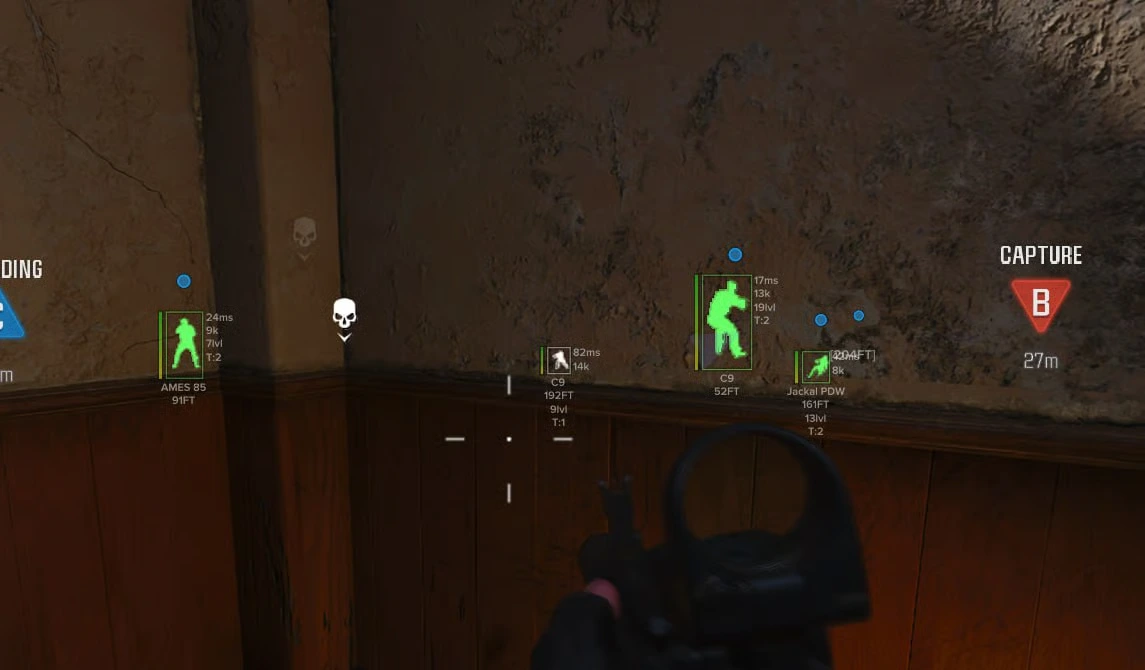
ESP overlays render information your screen normally hides: player positions through walls, health bars, distance indicators, weapons held, and team affiliation. In Call of Duty, ESP value varies dramatically by mode because each mode punishes information gaps differently.
Battle Royale: Verdansk Is 70% Positioning, 30% Gunfight
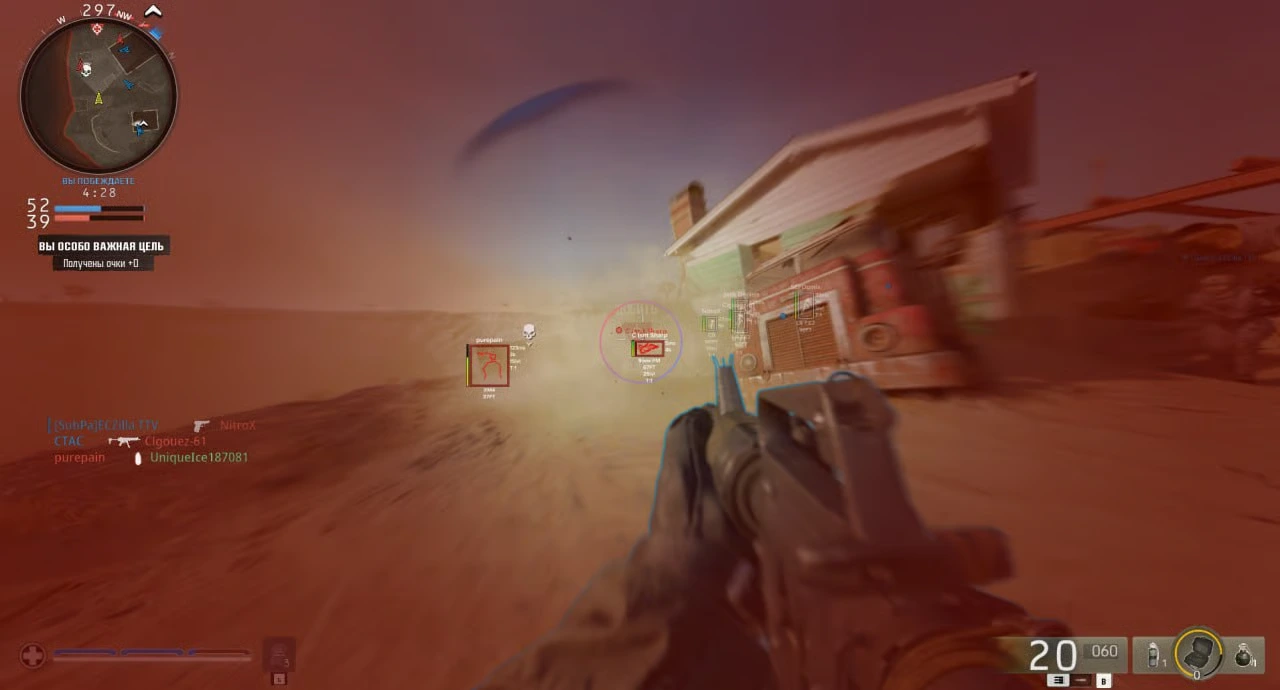
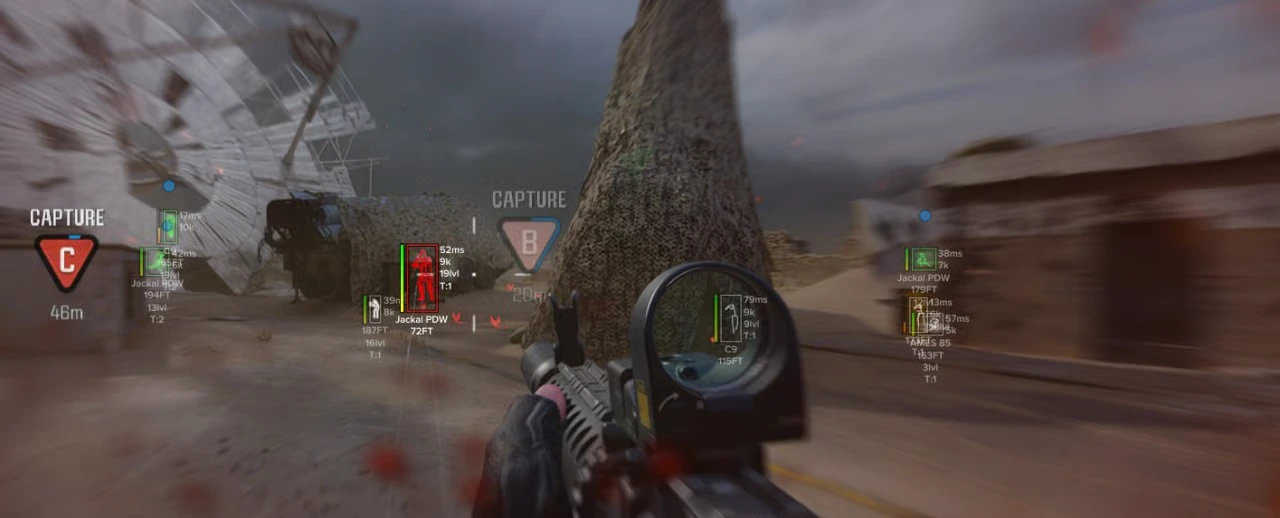
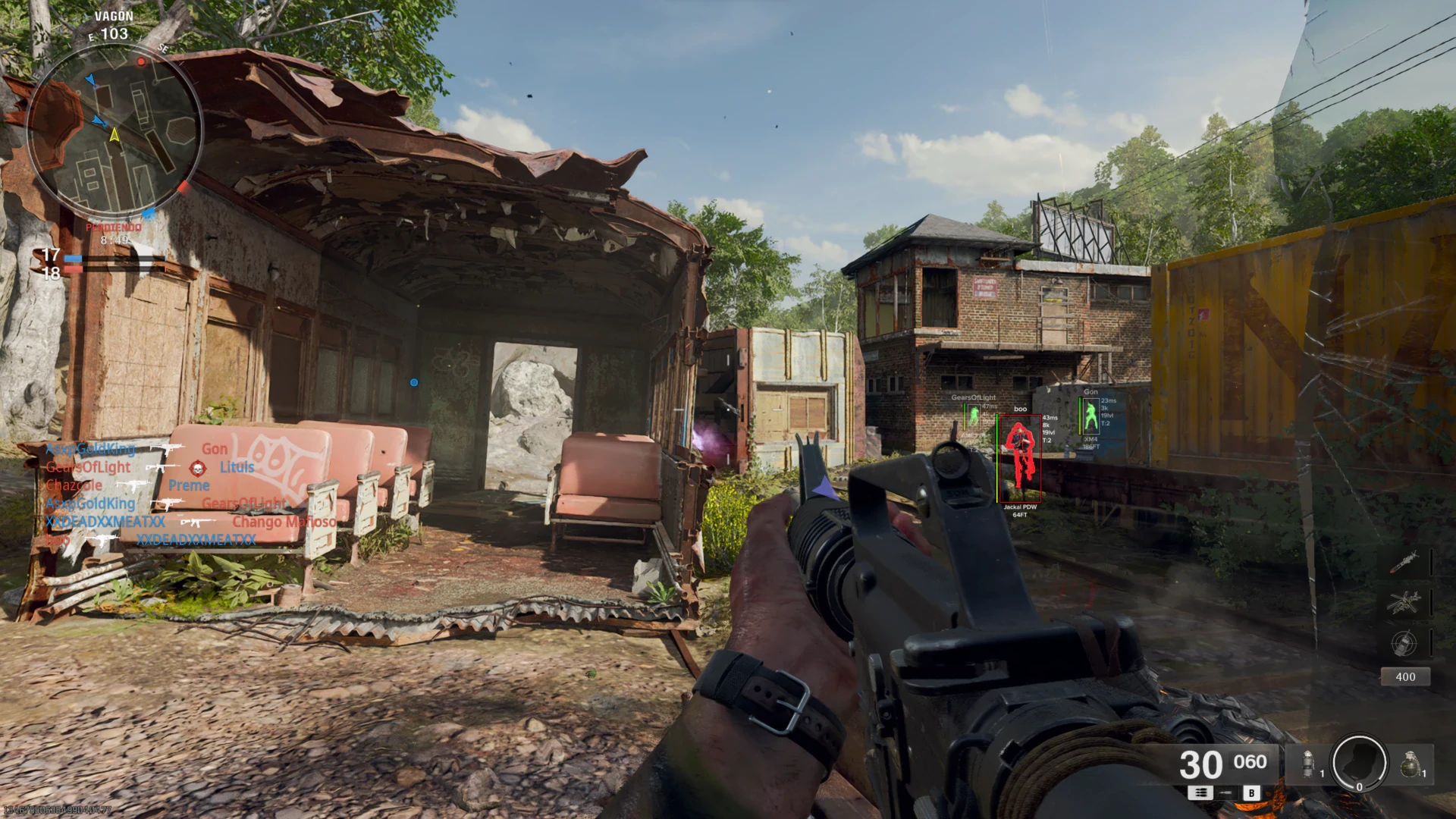
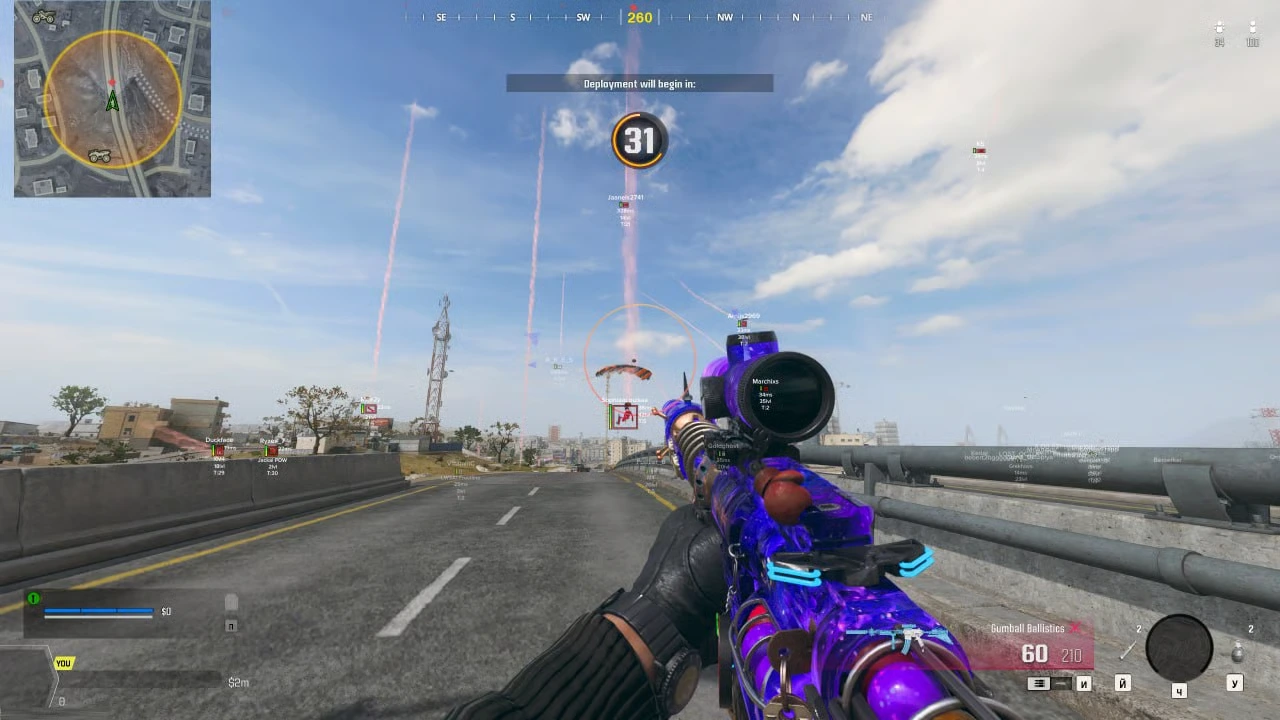
Verdansk has hundreds of buildings, elevation changes, and sightlines. ESP turns every structure transparent — you see the squad camping the second floor of the Superstore before you push. You see the solo in a dark corner of a buy station building. Loot ESP highlights armor plates, killstreak crates, loadout drops, and supply boxes through terrain. Radar overlay expands your minimap permanently — standard radar only shows unsuppressed gunfire, while ESP radar shows everyone regardless of suppressors or the Ghost perk.
Multiplayer: Pre-Aim Every Corner on Blackheart
Multiplayer maps are small and fast. Blackheart's three-lane layout has maybe a dozen common engagement points. Search & Destroy rounds last 90 seconds. With ESP, you know where every enemy spawned, which lane they're pushing, and whether they're pre-aiming your angle before you peek. In Hardpoint on Colossus, you can read rotations three spawns ahead because you see the entire enemy team in real time.
ESP is arguably more impactful than aimbot in multiplayer. You don't need inhuman aim if you always shoot first because you knew exactly where to look. Tactical FPS players who rotate between CoD and CS2 will find a different approach — Counter-Strike 2 ESP and wallhack handles smoke interactions and utility-based positioning that CoD doesn't have.
Zombies: Track Spawns, Mystery Boxes, and Training Routes
Zombies ESP shows zombie spawn locations, boss enemy positions, the current Mystery Box location, crafting part spawns, and Perk-a-Cola machine status across all current maps. For easter egg runs, knowing exactly where each step triggers eliminates the guesswork. The real value is efficiency — seeing zombie pathing through walls lets you set up training routes (circular kiting paths) without getting blindsided by a crawler you missed.
Call of Duty DMA Cheats & Hacks — Hardware Reads Against a Kernel Anti-Cheat
Call of Duty DMA cheats run on a second PC connected by a PCIe card that reads the game's memory directly, with nothing installed on the machine running the game. Because no code is injected into the Call of Duty process and no driver loads on the gaming PC, RICOCHET's kernel-level component has nothing local to scan — which is why DMA is the hardware-level approach players reach for against a Ring-0 anti-cheat.
That covers the kernel layer, not the whole system. RICOCHET's server-side behavioral analytics and replay analysis still score account behavior regardless of how the reads happen, and the newest titles add pre-match attestation. Call of Duty DMA hacks change the read method, not the behavior your account produces on the server — so the same restrained configuration that keeps any setup low-profile still applies, and no hardware setup is permanently immune. On the previous release, where detection models are frozen, that server-side pressure is lower; in Ranked on the newest titles, it's highest.
The card selection, firmware, and second-PC hardware details live on the dedicated DMA firmware guide — this section stays on how DMA fits the Call of Duty ecosystem specifically, not on the hardware build.
Call of Duty HWID Spoofer — How Composite Hardware Fingerprinting Works
RICOCHET doesn't only track your account — enforcement is widely reported to reach the hardware. And unlike systems that track one or two identifiers, CoD's fingerprinting builds a composite from multiple components at once, which is why a Call of Duty HWID spoofer targets the whole set rather than a single serial.
What Gets Fingerprinted
A composite hardware fingerprint pulls identifiers from the motherboard serial number and UUID, drive firmware-level serial numbers (the firmware layer that survives reformatting), network adapter MAC addresses, and potentially GPU and CPU identifiers. With TPM 2.0 required on the newest titles, the attestation chip's unique identity is likely part of the composite too. These identifiers combine into a server-side hash, so changing one component — swapping a NIC, spoofing a single serial — often isn't enough, because the system cross-references multiple data points. Enforcement is tied to the account and the machine rather than your IP, which is why a VPN alone changes nothing.
Cross-Title Persistence
Here's what makes CoD's system different from most games on this site: enforcement can apply across all Call of Duty titles — past, present, and future. The publisher's official policy states that a permanent suspension can apply across titles in the franchise, tied to the account across every linked device. A single enforcement event can contaminate your access to the entire franchise, which is why a Call of Duty HWID spoofer is treated as baseline rather than optional here. Full spoofer details and setup live on the dedicated HWID spoofer hub.
The same spoofing principles apply across kernel-level anti-cheats on other titles — our Battlefield 6 HWID spoofing approach covers a different anti-cheat system with the same fundamentals.
How RICOCHET Anti-Cheat Works Across Every Call of Duty Title
RICOCHET is the publisher's proprietary anti-cheat system, active across all current CoD titles simultaneously. The community has plenty of jokes about it — but understanding its actual architecture matters more than the memes, because how you configure tools follows directly from how it works.
RICOCHET works through multiple layers. Each catches different things, and configuring around one doesn't mean you've accounted for the others.
Kernel-Level Driver (Ring-0)
RICOCHET installs a kernel-level driver at Ring-0 — the same privilege level as your operating system. This driver monitors processes attempting to interact with the game's memory space and flags unauthorized reads or writes. Unlike some kernel anti-cheats that run from system boot, RICOCHET's driver loads when you launch a CoD title and unloads when you close it — less persistent monitoring, fewer false flags, less pushback about always-on kernel access. The driver covers all active titles through the unified launcher: one kernel component, one target.
Server-Side Behavioral Detection
The servers analyze gameplay data from every match — not just stat tracking, but behavioral pattern analysis across your entire match history. An aimbot locking to heads at 97% accuracy for three straight matches doesn't look like a Diamond player having a good day. This layer catches patterns the kernel driver misses because it operates on aggregated data, not real-time memory scans.
This is also where restricted-lobby placement originates. If the behavioral system flags an account but hasn't hit a confidence threshold for other action, it can shift that account to a separate pool. This is the mechanism behind "shadow lobbies" — a server-side sorting step rather than a client-side one.
Machine Learning Replay Analysis
RICOCHET uses ML models trained on a large volume of gameplay data. A replay investigation process captures completed matches and replays them using stored positional data, applying behavioral scoring — often called "sus scoring" — to identify aimbot snap patterns, wallhack pre-aim behaviors, and inhuman reaction times. This works retroactively: a clean-looking match can be reviewed later. The models are trained primarily on PvP multiplayer and battle royale behavior, which matters for Zombies players — more on that below.
TPM 2.0 + Secure Boot + Cloud Attestation
The biggest recent anti-cheat change applies to the newest titles specifically: the current flagship and the battle royale require TPM 2.0 and Secure Boot enabled on PC, while the previous release and older titles do not. These feed into a remote attestation system — before you play, RICOCHET checks that your PC booted in a trusted state: no unauthorized drivers during boot, no Secure Boot tampering, TPM chip attesting to system integrity.
On top of that, Ranked Play adds a stronger, cloud-based remote attestation — verification happens against an external attestation service rather than just the local TPM. The publisher describes it as the most robust attestation technology available in gaming. The practical effect is clear: Ranked runs stricter checks than casual modes, which is exactly why the configuration guidance later on this page treats Ranked as its own category.
In-Game Mitigations — How Detected Clients Are Disrupted
Rather than only detecting and removing, RICOCHET can disrupt a detected client mid-match. As technical mechanisms, the mitigations work like this:
Cloaking — legitimate players become invisible to the detected client. ESP shows nothing there, and an aimbot has nothing to lock onto, while those legitimate players still see the detected account normally.
Disarm — weapons are stripped from the detected client mid-match.
Hallucinations — decoy characters are injected into the detected client, so an aimbot spends cycles tracking targets that don't exist.
Damage Shield — legitimate players take reduced or no damage from the detected client's attacks.
Restricted Lobbies — the server-side sorting step described above, moving flagged accounts into separate pools.
RICOCHET by the Numbers
For scale: the publisher has reported over 800,000 accounts permanently banned across all Call of Duty titles over the past year, more than 136,000 accounts across multiplayer and the battle royale banned since Ranked Play launched, and over 55,000 cheaters disrupted in a single month through in-game mitigations. On the vendor side, in the year following the previous release's launch, 295 resellers were disrupted, 53 shut down operations permanently, and 11 primary vendors were taken down through legal action.
Community perception remains mixed. Some players never encounter cheaters; others say certain lobbies feel full of them. Reverse engineers have described RICOCHET's early driver protection as relatively easy to work around — though those assessments predated the TPM and Secure Boot requirements that now front the newest titles, which is a meaningful shift in the baseline.
Call of Duty Zombies Cheats — PvE Tools for the Franchise's Fastest-Growing Mode
Zombies is the one mode where the detection picture is fundamentally different from multiplayer or battle royale — and the current release's Zombies is widely considered the best the mode has been in years.
Why the Detection Picture Is Different in Zombies
Three factors. First, it's PvE — you're fighting AI, not other players, so there's no opposing human to notice anything. Second, RICOCHET's ML models are trained on PvP behavioral data: snap-aim against human targets, pre-aim wallhack behavior, inhuman reaction times in gunfights. Zombies combat looks fundamentally different — aiming at hordes, not tracking strafing opponents — so the PvP-trained models have limited applicability. Third, there's no killcam and no spectator replay of a Zombies run.
Server-side analytics can still register extreme statistical outliers, so this isn't a free-for-all — but the practical picture is very different from any PvP mode. If you play another PvE-heavy title, Dead by Daylight tools for another PvE-heavy title offer a similar low-pressure environment with different asymmetric mechanics.
Available Zombies Content
The current Zombies lineup includes round-based maps (including Ashes of the Damned and Paradox Junction), Survival variants with unique modifiers (Vandorn Farm, Mars, Cursed), a permanent Starting Room challenge, and Dead Ops Arcade — the top-down twin-stick mode that has been a franchise staple since the sub-series began.
What Zombies Tools Actually Do
The toolkit goes beyond aimbot and ESP. God mode prevents downs entirely — useful for solo high-round attempts where a single Fury zombie hit at Round 40+ is instant death. Infinite ammo removes the economy that forces Mystery Box and Pack-a-Punch visits between rounds. Point manipulation bypasses the grind to afford Perk-a-Colas, Pack-a-Punch tiers, and wall buys. Easter egg assistance provides step-by-step triggers for complex quest chains.
For camo grinders specifically, Zombies tools compress weeks of mastery challenge completion into hours. The Weapon Prestige system requires hundreds of kills with specific attachments and conditions — tools remove the time barrier.
Ranked Play Cheats for Call of Duty — Competitive Rules and Battle Royale Ladders
Ranked Play is where CoD gets serious — and where RICOCHET runs its strictest checks. Ranked carries the tightest configuration requirements in the franchise, but the demand matches the frustration of SR stalls and tier regression.
How Ranked Works
The flagship title's Ranked uses a competitive league ruleset: restricted weapons, restricted equipment, and a specific map pool (Blackheart, Colossus, Den, Exposure, Raid, Scar) playing Hardpoint, Overload, and Search & Destroy only. Eight SR tiers, and matchmaking pairs players of similar skill — meaning every lobby is sweaty and every SR point matters. The battle royale has separate Ranked ladders for the full BR and Resurgence with independent progression.
Cloud Attestation Targets Ranked Specifically
The cloud attestation layer runs specifically for Ranked. Before queuing Ranked on PC, your machine's boot state gets verified against an external attestation service — a harder check than casual matchmaking's standard TPM/Secure Boot attestation. This is why detection pressure in Ranked is higher than in Open Moshpit, and why conservative settings matter more here than anywhere else in the franchise.
What Fits Ranked vs. What Stands Out
Ranked is where blatant settings stand out fastest. Silent aim over visible aimbot. Callout ESP (audio cues for nearby enemies) over full box ESP. Subtle bone prioritization over headshot-only locks. Players in Ranked lobbies are better at recognizing suspicious play, more likely to report, and the review system prioritizes Ranked reports. The mode-by-mode table further down maps these settings out.
Competitive FPS players who also grind CS2 or Valorant face different anti-cheat architectures — Valorant hacks that bypass a boot-time kernel driver require a fundamentally different approach, since that anti-cheat persists from system startup rather than loading with the game.
The IW 9.0 Engine — Why Cross-Title Call of Duty Products Exist
Every current CoD title runs on IW 9.0 — the first time every studio in the pipeline has shared one engine version instead of forking incompatible branches. That means shared memory structures, rendering pipelines, and networking stacks, so tools built for one title's memory layout adapt to the others with offset changes rather than a rebuild. It's why cross-title CoD products exist as a category, and why a DMA setup or aimbot profile carries between titles.
If a future mainline release debuts a new engine version, expect a short transition — offsets and structures shift, but CoD's engine upgrades have always been evolutionary rather than ground-up, so adaptation is measured in days, not a rebuild from zero.
The Annual Call of Duty Cycle — What Happens When a New Title Launches
No other FPS franchise runs CoD's annual replacement cycle. Every fall a new title launches, the previous one enters maintenance, and the ecosystem shifts — the battle royale absorbs the new weapons and operators within weeks, while the old title's population bleeds and its anti-cheat effectively freezes in place. The publisher has confirmed it won't ship the same sub-series two years running, so the next release is widely expected to bring a different studio to the front, possibly with a DMZ-style mode.
Two things matter for tools here. First, continuity: because CoD upgrades the IW engine iteratively rather than swapping engines, tools update in days rather than rebuilding from scratch each year. Second, enforcement carries forward — an account and hardware flagged in one release can be locked out of the next on launch day, which is why HWID spoofing before each annual launch is treated as baseline; the composite fingerprint doesn't reset when a new title ships. Cosmetics don't carry either, since carry-forward was cancelled for the current flagship — so don't over-invest in skins late in a title's life.
Call of Duty Feature Configuration — PvE Zombies vs PvP Multiplayer vs Battle Royale
Same tools, three fundamentally different contexts. This table shows how features should be configured across CoD's three main modes — and why one-size-fits-all doesn't work.
Feature Setting Zombies (PvE) Multiplayer (PvP) Battle Royale (PvP) Why Different Aimbot mode Full lock Silent aim Triggerbot only Zombies has no killcam; MP has instant replay; BR has spectators Aim bone target Head only Chest priority Bone randomization Headshot damage rewards PvE; headshots look suspicious in killcam; BR needs natural patterns across long engagements ESP entity filter Zombie spawns + loot boxes + Perk-a-Cola Players + minimap radar Players + loot + crates + loadout drops Each mode has different high-value entities ESP distance Unlimited 50m (map-size limited) 200m+ (Verdansk scale) Map geometry determines useful ESP range Aimbot FOV Maximum Narrow (15-25°) Very narrow (10-15°) Wide FOV safe in PvE; narrow in PvP avoids snap-lock tells HWID spoofer priority Low Recommended Strongly recommended PvE pressure is lowest; both PvP modes carry full enforcement Detection pressure Lowest Higher Higher PvE has no player reports; ML trained on PvP data Recommended intensity Maximum aggression Conservative Spectator-safe only Aligns with the pressure profile per mode If you play mostly the battle royale — the Warzone features page covers BR-specific configurations and loot ESP in detail. A Call of Duty HWID spoofer is strongly recommended there given the free-to-play reroll dynamic and aggressive enforcement.
Frequently Asked Questions About Call of Duty Cheats
Do Call of Duty cheats work across the flagship title, the battle royale, and the previous release?
All current titles share the IW 9.0 engine through a unified launcher, which means shared memory structures and rendering architecture. Cross-title compatibility is technically feasible because of this shared foundation. Check the individual game pages to confirm what's available for each title and current compatibility status.
How does RICOCHET Anti-Cheat detect aimbot and ESP in Call of Duty?
RICOCHET is multi-layered: a kernel-level driver monitoring memory access in real time, server-side behavioral analytics scanning match history, machine learning replay analysis that reviews completed matches, and — on the newest titles — TPM 2.0 + Secure Boot attestation verifying system integrity before gameplay. The kernel driver loads only while a CoD title is running. Cloud attestation is active for Ranked Play specifically.
Are Call of Duty DMA cheats detected by RICOCHET?
DMA reads run on a separate PC with nothing installed on the gaming machine, so the kernel-level driver has no local process to scan. That addresses the client side only — RICOCHET's server-side behavioral analytics and replay analysis still score account behavior, and the newest titles add pre-match attestation. DMA changes how the reads happen, not the behavior your account produces, so restrained settings still matter and no setup is permanently immune.
Does a Call of Duty HWID ban carry over when the next annual title launches?
Enforcement can carry across every Call of Duty title — past, present, and future. The publisher's policy states a permanent suspension can apply across titles in the franchise, tied to the account and its linked devices, and it doesn't reset between releases. A Call of Duty HWID spoofer before each annual launch is treated as baseline for clean access to a new title.
Should Ranked Play settings differ from casual Open Moshpit?
Yes. Ranked adds cloud-based attestation and prioritized report review, and opponents are more likely to recognize suspicious play. Open Moshpit uses relaxed SBMM with no SR tracking and no cloud attestation. Use conservative settings in Ranked — silent aim over visible aimbot, callout ESP over full boxes, narrow FOV over wide.
Three active titles, one anti-cheat system, one engine, one hardware fingerprint database that follows you across every release. That's the CoD ecosystem — and every mode within it calls for different configurations. Zombies rewards maximum aggression. Multiplayer rewards anything that looks natural in a killcam. Battle royale adds spectators watching your every move. The PvE vs PvP table above maps exactly how to calibrate for each context. Check the status page for current compatibility, explore the individual title pages for feature specifics, and reach out on Discord if you have questions about your particular setup.
-
-
Total Members 5,755
-
Most Online 149
-
Newest Member ejder0234

-
-
Reviews
-

By nineyt. · Posted
I've had a great experience not only with jjboy, but burger themselves. They have great staff that get back to you on time, and solve pretty much any issue you end up running into. -

By 10_jacob_01 · Posted
Howdy! I've been purchasing products from Burger cheats since 2025 and they've had the best ranges of selection for multiple products! Next cheat full and Lite (EFT) - major fan! honestly one of the best I've used and it has the features for pvp and pve, some tailored for those pve mains like myself, customizable UI, very modular and super user friendly, absolutely would recommend it to others! Collapse (EFT) - Great all around and it's nice and very straight forward, I do enjoy the UI of this one Ancient (EFT) - A good beginner one for people just getting into EFT cheesing. and lastly Vortex (War Thunder) - This has been my go too every time I want to just go ham in war thunder, I absolutely love it! Overall with burgercheats they've provided such clear fool proof instructions I simply cannot thank them enough, as they were my first service provider and will always be my go to service provider via myself or recommending to others! - A very happy Customer!! -

By sieto215 · Posted
I’ve had a really good experience with the service so far. The website is easy to use, everything is well organized, and the AI assistant is surprisingly helpful and actually gives useful answers. What impressed me most was the support. Whenever I had a question or needed help, I got a proper response instead of just a generic answer. The support was friendly, helpful, and really tried to solve the issue. Overall, I’m very satisfied with the website, the tools, the AI assistant, and especially the customer support. Definitely a very positive experience and something I would recommend. -

By EnteMitTalente · Posted
great product, paypal purchase went flawless with fast response and @admin helped me solve my tech issues -

By _swappy · Posted
I have gotten one of the best marketplace experience here. I personally have bought apex legends cheat here several times already and have recommended a few of my friends as well. In my personal opinion it is the best marketplace in this domain as of right now.
-