
-
Hunt Showdown Cheats — Aimbot, ESP, and Radar for the Bayou's Deadliest Bounties
Undetected Hunt Showdown cheats and hacks — aimbot, ESP, and full-map radar tuned for a permadeath extraction shooter where one bad read on a sound cue costs you everything.
-
Featured Products
-
-
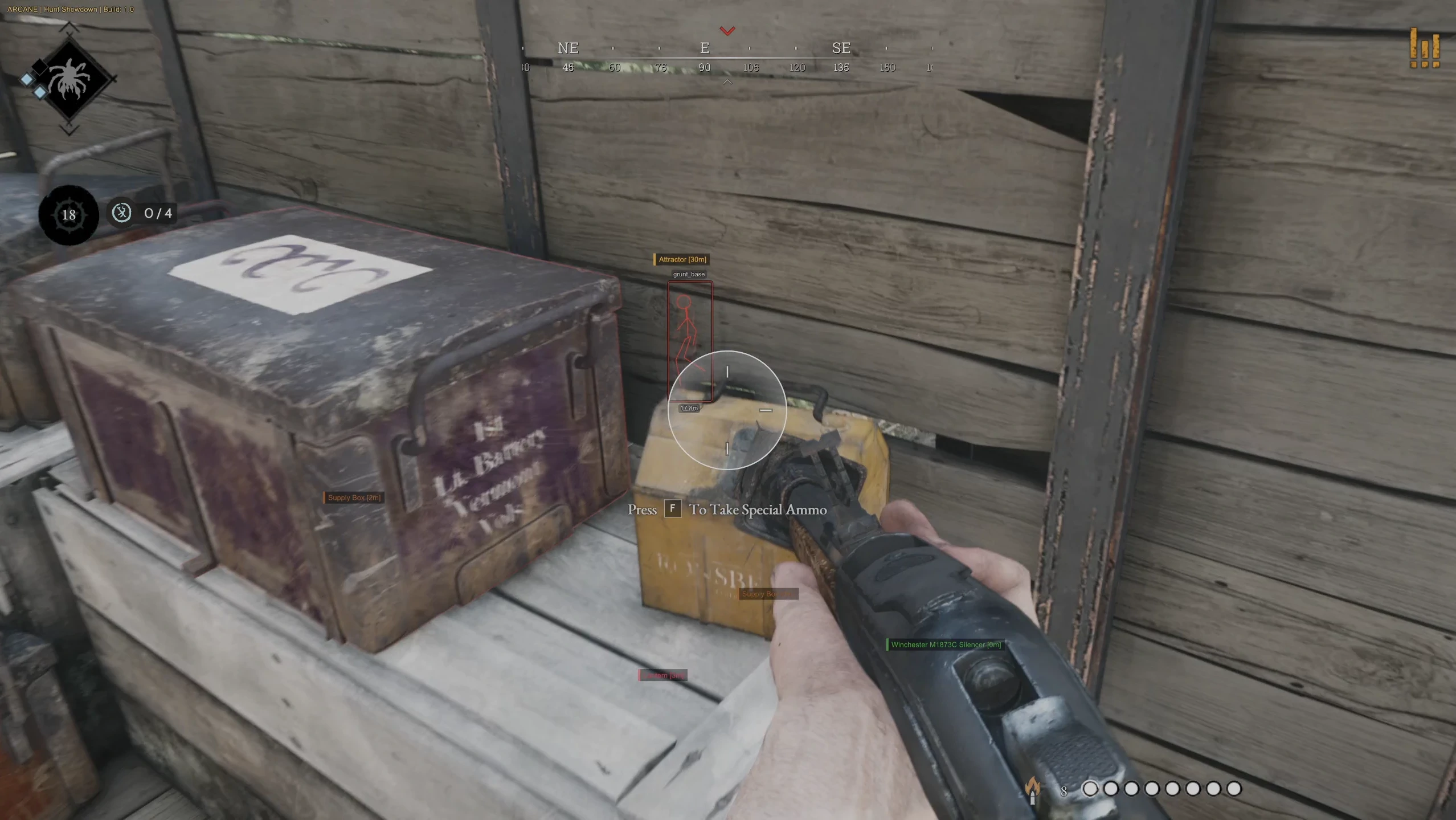
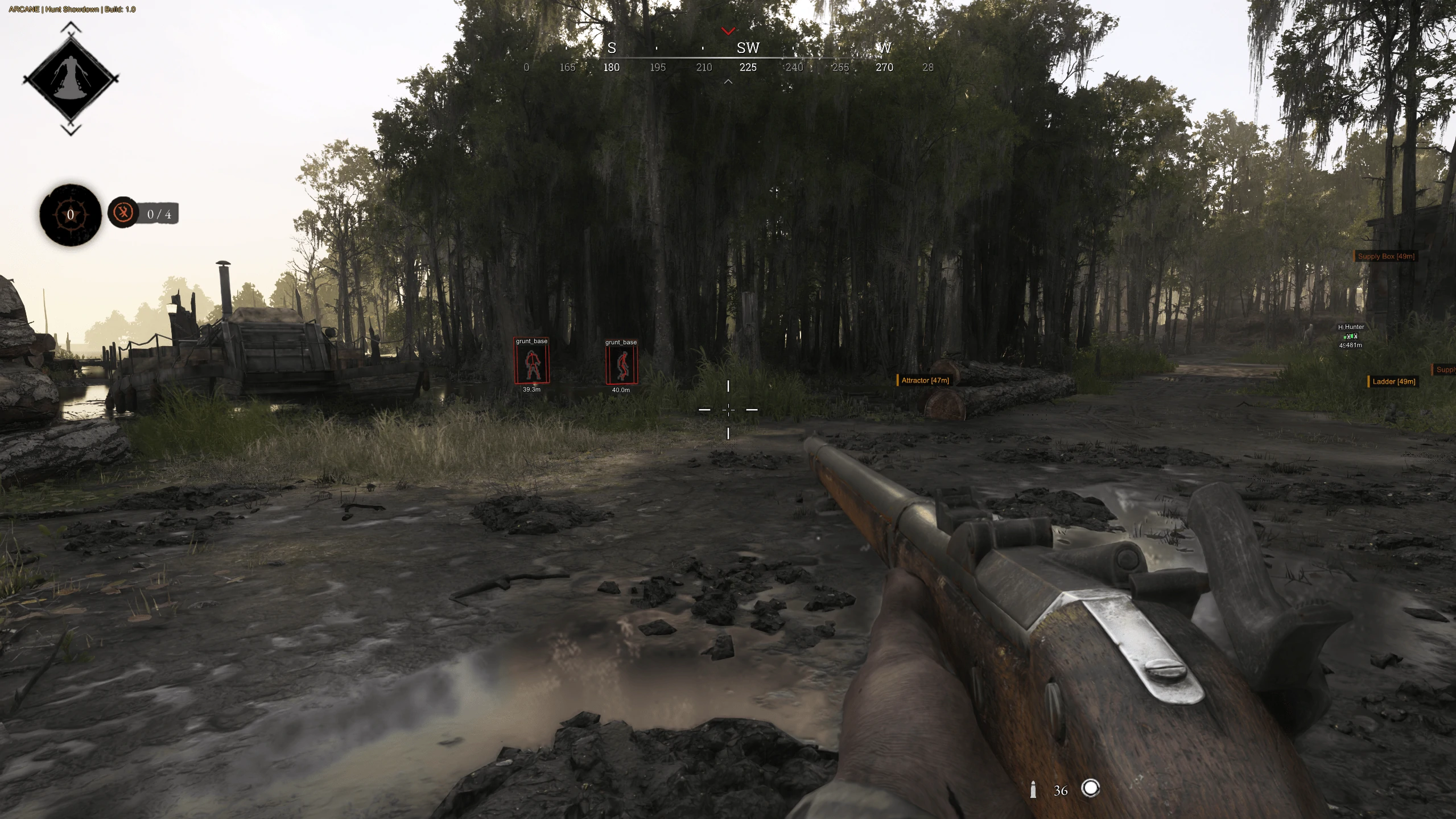
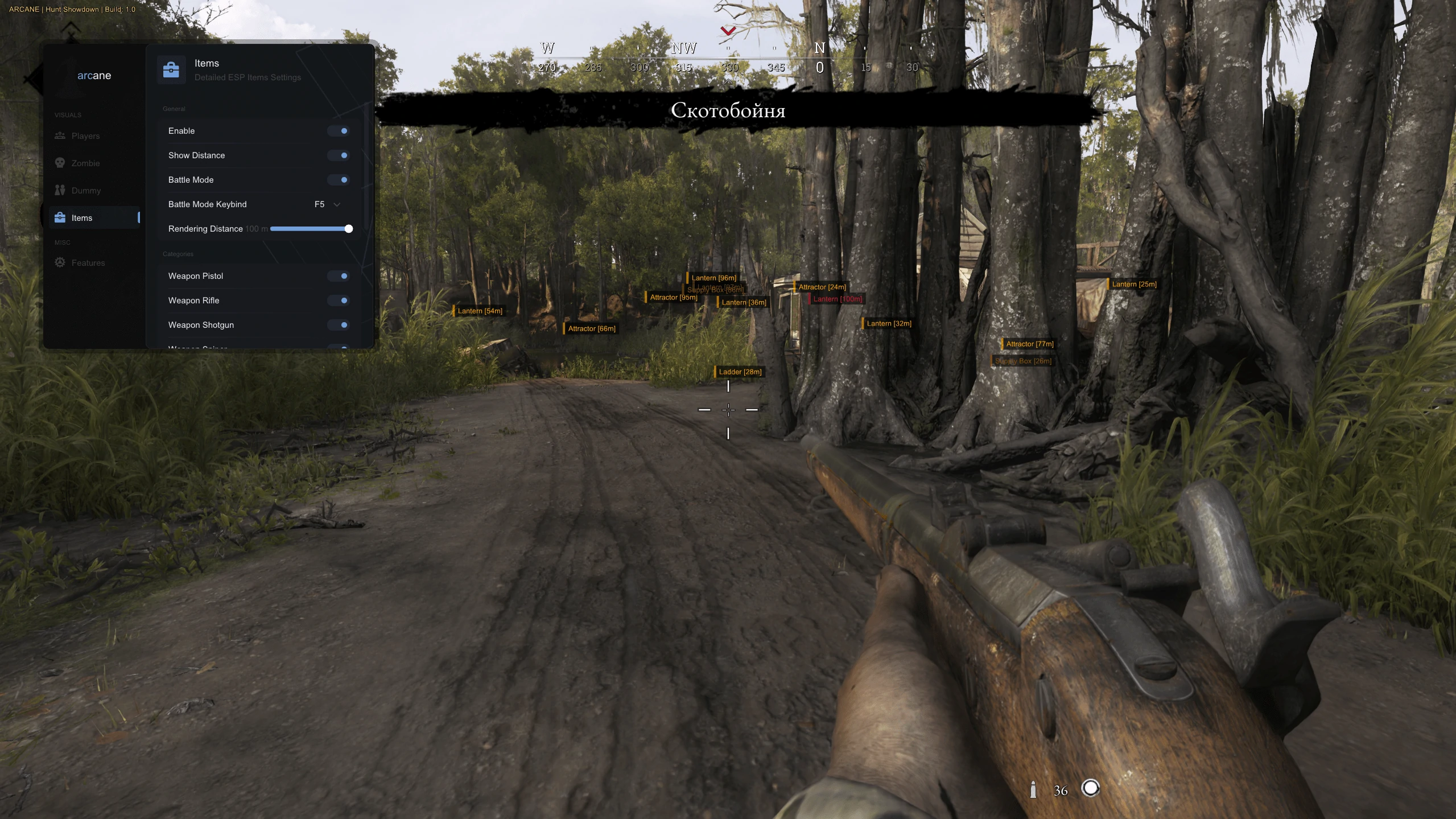
BurgerCheats offers undetected Hunt Showdown cheats including aimbot with bullet velocity compensation, ESP with entity filtering for hunters and AI, and full-map radar — all built for CryEngine 5.11 and compatible with Hunt's EAC kernel-level anti-cheat. Tools are updated within hours of every Hunt patch. Features are tuned specifically for Hunt's permadeath mechanics: the aimbot accounts for projectile travel time across every weapon class, ESP separates hunters from Grunts, Immolators, and boss monsters, and radar extends awareness beyond Dark Sight's brief, bounty-gated bursts.
Hunt: Showdown 1896 is a PvPvE extraction shooter set in a horror-infused American frontier — part monster hunt, part bounty chase, part permadeath survival. Up to twelve players drop into maps like Stillwater Bayou and Mammon's Gulch as hunters tracking supernatural boss monsters through Dark Sight, a mechanic that reveals clues via supernatural vision. Kill the boss, banish it, grab the Bounty Token, and fight your way to extraction — knowing that every hunter who dies is permanently gone along with all equipped gear, traits, and weapons.
What makes Hunt unlike any other shooter is how it weaponizes information. Crows, dogs, broken glass, and chain rattles form an audio detection grid across every compound. Dark Sight reveals enemy hunters as orange silhouettes — but only while carrying a bounty, only for a few seconds at a time, and only by burning a finite meter. Every match is a high-stakes information war fought with 1890s firearms that use real projectile ballistics, not hitscan. The right tools don't just sharpen your aim. They change how much you know before the first shot fires.
That's the core problem. Hunt isn't a twitch shooter where raw aim wins fights. It's an information war fought through sound traps, supernatural tracking, and 1890s firearms with real bullet travel time — all under the permanent threat of losing your hunter, your loadout, and every trait you've earned. The right tools don't just improve your aim — they change how much you know before the trigger is pulled, and in a permadeath game that head start is the difference between extracting and losing everything.
Hunt Showdown Hacks: Turning the Bayou's Information War in Your Favor
Every Hunt Showdown hack in this toolkit answers the same question the bayou keeps asking: who's nearby, and where? These Hunt Showdown hacks aren't built to turn a permadeath extraction shooter into a twitch aim duel — they're built to close the information gap between a two-thousand-hour veteran who reads every crow trigger and a player who only hears noise. ESP tells you who's crouched behind the door at Catfish Grove before you step through. Aimbot with velocity compensation solves the 1890s bullet travel that hitscan players never have to think about. Full-map radar covers the 360 degrees Dark Sight leaves blind. The rest of this guide breaks down each one — how it works, how to tune it for every map and mode, and how to run it without tripping the game's anti-cheat.
Why Hunt's Permadeath Changes Everything About Information
Hunt Showdown's Stakes Are Not Like Other Shooters
Here's the thing about Hunt that players from Tarkov's extraction pressure understand instinctively: death is not a respawn timer. Your hunter dies, they're gone — gear, traits, weapons, all of it wiped. A fully-kitted Mosin plus Uppercut loadout runs 800+ Hunt Dollars. Lose three of those in a row and your economy is hurting. Lose your Bloodline level 50 hunter with Fanning, Necromancer, and Physician? That's hours of trait farming evaporated in a single Romero blast from a white shirt hiding behind a door.
This permadeath economy creates a decision pressure that no round-based shooter replicates. Every compound approach, every boss banishing, every extraction run is a genuine risk calculation — not a warm-up round.
Sound Traps Turn the Map Into a Detection Grid
Hunt's sound design is the best in the genre. It's also the cruelest. Crows launch when you walk within 15 meters. Kenneled dogs bark in chains that reveal your movement path. Broken glass under your boots echoes through compound walls. Even water splashing changes pitch based on depth. The community measures skill by audio awareness more than mechanical aim — triggering a crow flock near Healing Waters while a duo holds the Assassin bounty inside is basically announcing dinner.
This creates an asymmetry problem. Players who already know every sound trap location, every glass patch, every crow perch have a massive information edge over anyone who doesn't. Veterans with two thousand hours know that the chain rattle near Blanchett Graves means someone entered from the south. Newer hunters just hear noise. Tools that provide visual information — position, distance, threat type — don't replace audio skill. They fill the gap between "someone's nearby" and "they're 47 meters northeast, second floor, reloading."
If you also play other EAC-protected titles, our undetected Rust tools also handle EAC through the same kernel-level approach — though Rust's anti-cheat configuration runs differently from Hunt's CryEngine implementation.

Reading the Bayou: How Hunt Showdown ESP Solves the Sound Puzzle
Hunt Showdown ESP Entity Filtering: Hunters vs. AI vs. Bosses
A basic Hunt Showdown wallhack — the kind bundled into a game like Apex Legends cheats — shows enemy players through walls and stops there. Hunt is different. The bayou is crawling with AI — Grunts patrol roads, Immolators explode when shot with bullets, Hellhound packs rush in waves, Hives throw bug swarms, Meatheads lumber through compounds blind but deadly. And somewhere in that noise are the actual hunter teams who will permakill your character.
The ESP entity filter separates all of this into distinct layers. Hunters get one color. Boss monsters get another. Regular AI can be toggled off entirely or filtered to show only dangerous specials like Immolators and Concertina Armored. The result: your screen isn't drowning in Grunt outlines while you're trying to track the duo pushing Fort Carmick's back stairs.
Distance Sliders and Health Overlays in the Bayou
ESP distance matters more in Hunt than almost any other shooter because engagement ranges vary wildly across maps. On Stillwater Bayou's flat swamp terrain, a 200-meter ESP range catches teams rotating between compounds. Inside Mammon's Gulch's underground mine networks, anything beyond 80 meters is just rock and dirt — short range with tight filtering keeps the overlay clean.
Health overlays add another layer that's uniquely valuable in Hunt. The health chunk system means a hunter who's been downed and revived once has permanently lost a health bar segment. Seeing that an approaching enemy is already missing two chunks — sitting at 100 HP instead of 150 — changes your engagement math entirely. A Sparks body shot at 149 damage that normally leaves a sliver of health now becomes a guaranteed kill. That's information you can't get from sound cues alone.
Look, rats who camp compounds with a Romero and patience will always exist in the bayou. But ESP turns their ambush into a known position. You see them crouched behind the door at Catfish Grove before you step through. That's not removing the challenge — it's answering Hunt's core question: who's waiting, and where?
You can verify current compatibility and uptime on the live compatibility status page before queuing into your next bounty.
Hunt Showdown Aimbot Settings for 1890s Firearms: Bullet Velocity and Bone Targeting
Why Hunt's Projectile System Demands Velocity Compensation
Most multiplayer shooters use hitscan — you click, the hit registers instantly. Hunt doesn't work that way. Every round in the bayou is a physical projectile with real travel time, drop, and penetration values. A Mosin-Nagant fires at roughly 615 m/s. The Sparks LRR sits around 533 m/s. A compact Winfield drops to roughly 400 m/s. At 150 meters, the difference between these velocities means 30 to 80 milliseconds of additional lead you need to hold on a moving target.
The aimbot's velocity compensation calculates this lead automatically for whichever weapon you're holding. Switch from a Lebel to a Caldwell Uppercut mid-fight and the prediction adjusts — because the Uppercut shares long-ammo velocity but has a very different effective range envelope than the Lebel's 10-round tube.
Hunt Showdown Bone Targeting: Head vs. Upper Body vs. Legs
Bone selection in Hunt carries weight that other games don't match. A headshot on a 150 HP hunter is an instant kill: long ammo lands it at any range, and compact and medium weapons one-shot to the head too within their effective range. But Hunt's sway mechanics — especially on scoped rifles after sprinting — make consistent headshots brutally difficult at range. Upper-body targeting offers more forgiveness: a Sparks body shot deals 149 damage, leaving one HP. If your duo partner tags them with literally anything — a Nagant revolver, a thrown knife, a lantern splash — that's a confirmed kill.
The aimbot's FOV slider controls how far off-center it acquires targets. At 5-6 star MMR lobbies where players spectate after death, a narrow 30-degree FOV with high smoothing looks natural. Nobody clips a highlight reel of your aim snapping to heads through walls when the crosshair drifts there the way a skilled hunter's would. Smoothing is your insurance policy against reports.
The full aimbot parameter breakdown is on the BurgerCheats Hunt feature breakdown.
Dark Sight, Clue Tracking, and the Hunt Showdown Radar Advantage
How Dark Sight Works — and Where It Falls Short
Dark Sight is Hunt's signature mechanic. Activate it and blue wisps point toward the nearest unfound Clue. Once your team banishes a boss and picks up the Bounty Token, Dark Sight upgrades — orange silhouettes reveal enemy hunters through walls within a limited range, burning through a finite resource meter.
The catch: Dark Sight's boosted vision reveals hunters all around you, but only in brief bursts. It drains in seconds, runs on a finite meter, and only activates after you've already committed to the riskiest moment in the match — carrying a bounty with lightning broadcasting your position to every surviving team on the map.
Hunt Showdown Radar: Persistent Awareness Beyond Dark Sight
The radar fills every gap Dark Sight leaves open. It provides constant, 360-degree positional data that doesn't drain or require holding a bounty. Your team holds the token inside Mammon's Gulch's underground mine network — three tunnel exits, two teams converging. A Dark Sight burst lights up the nearby teams as orange shapes through the rock, then the meter drains and they fade. The radar keeps all of them on your display, including the third team flanking through the oil field shaft to your northwest, without spending a charge or holding the token.
For clue-route optimization, radar changes the tracking phase entirely. Instead of wandering between compounds hoping the next Clue narrows the zone, you see where other teams are pathing. If two teams converge on Lawson Delta's Iron Works from the north, you take the southern route to Wolfshead Arsenal. You arrive at the boss compound first — or you set up an ambush at the chokepoint between them.
Players who also run another extraction shooter like Gray Zone Warfare recognize this pattern: the radar turns reactive gameplay into proactive decision-making. In Hunt, where a single wrong rotation costs your hunter permanently, that shift is everything.
Surviving Hunt Showdown Boss Fights: PvE Feature Tuning for the Butcher, Spider, and Beyond
Each Hunt Boss Demands Different Aimbot Targeting
Hunt has six boss types (the Butcher, Assassin, Spider, Scrapbeak, plus the wildcard Rotjaw and Hellborn), and none of them play by the same rules. The Butcher charges with a flaming pig hook — headshots during the charge animation stagger him but require hitting a moving, erratic hitbox. The Spider climbs ceilings and drops on your position — aiming for the underbelly during ceiling phases deals bonus damage but the angle is disorienting without assistance. Scrapbeak armors up with collected junk and only staggers reliably from leg shots. The Assassin splits into clones and reforms — you need to target the real body during the reformation window, not the decoys.
The aimbot's target priority switch is what makes this manageable. Set it to boss-only during the banishing phase, flip to hunter-priority the instant footsteps crunch on the gravel outside. That transition — PvE to PvP in half a second — is where fights are won or lost in Hunt.
Managing the Banishing Broadcast
Banishing a boss takes three to four minutes. During that window, the entire server sees lightning over your compound. Every surviving team now has a choice: push for the bounty or camp an extraction route. You're locked in position, defending a fixed location against threats from any direction.
This is where ESP and radar working together changes the math. ESP tracks incoming hunters by distance and health status. Radar shows their approach vectors. A team pushing DeSalle's Kingsnake Mine from the quarry side enters through the narrow eastern tunnel — if you see them at 120 meters, you reposition to cover that entrance before they hear your footsteps. Without that information, you're guessing which of four entry points they'll choose while Hellhound packs spawn at your back.
For similar PvE-meets-PvP pressure in another EAC title, Dead by Daylight's EAC implementation handles the same anti-cheat kernel — but Hunt's CryEngine interaction layer is architecturally different, which is why game-specific tuning matters.
Questions about boss-phase configurations? The Discord community runs 24/7 and other Hunt players share their setups there.
Hunt Showdown EAC Kernel-Level Detection: What Hunters Need to Know
How EAC Operates Inside Hunt's CryEngine
Hunt: Showdown uses Easy Anti-Cheat at the kernel level — a Ring 0 driver on Windows that loads before the game process starts. EAC monitors memory access, process injection, and file integrity in real time. When the developer relaunched the game on the upgraded CryEngine 5.11 engine, they deployed a newer EAC version with expanded signature detection. The result was a significant jump in automated bans.
The developer maintains a dedicated Fair Play Task Force that works alongside EAC's automated systems. They've also built custom server-side detection layers that analyze gameplay patterns specific to Hunt — things like statistically improbable headshot rates across bullet-velocity weapon classes, or suspiciously consistent tracking through walls that don't support wallbanging.
Beyond EAC: Hunt's Behavioral Input Layer
Easy Anti-Cheat is no longer the only system watching. The developer added AnyBrain, a behavioral anti-cheat that collects raw input — mouse, keyboard, and controller signals — and analyzes the patterns for software-assisted movement instead of scanning your memory or files. It runs alongside EAC and the manual review team, not in place of them. Its most visible job right now is catching console players who spoof mouse-and-keyboard input as a controller, but the same input-pattern analysis is exactly what flags inhumanly consistent tracking on any platform.
This is why raw aim numbers matter more than ever. A memory-scanning anti-cheat asks one question: is there injected code? A behavioral layer asks a different one: does this input look human? Snapping a crosshair a hundred and eighty degrees onto a head through a wall reads as software even when nothing suspicious sits in memory. Conservative smoothing, a narrow FOV, and toggling assistance off when you'd logically have no information aren't just habits for dodging spectators — they keep your input curve inside the envelope a behavioral system treats as human.
Why Update Cadence Matters After Every Hunt Patch
Hunt receives major content updates every two to three months, with hotfix patches between them. Each update can shift EAC's signature database. Tools that aren't updated immediately after a patch risk detection within hours — not days.
BurgerCheats' Hunt cheats update within hours of every patch drop. The status page shows real-time compatibility so you never queue into a match with outdated software. That cadence isn't a selling point — it's a survival requirement in a game where EAC bans are hardware-level and a single detection flags your entire rig.
For context, The Finals runs a different EAC config despite using the same anti-cheat vendor. Each game's EAC deployment has unique signature sets, scan intervals, and server-side validation — which is why generic multi-game tools consistently underperform game-specific builds.
Bounty Hunt vs Bounty Clash vs Soul Survivor: Hunt Showdown Mode-Specific Setups
Hunt Showdown Bounty Hunt: The Full 40-Minute Gauntlet
Bounty Hunt is the core experience — solos, duos, or trios dropped onto a full map with one or two bosses to track, kill, banish, and extract. Matches run twenty to forty minutes. The pacing is slow and deliberate during the tracking phase, explosive during boss fights, and suffocating during extraction. Conservative feature settings match this rhythm: moderate ESP range, controlled aimbot smoothing, radar as a background awareness layer rather than a crutch.
At higher MMR brackets — 5 and 6 stars — players spectate after death. Subtlety is mandatory. High smoothing, narrow aimbot FOV, and toggling ESP off during moments where you'd logically have no information keeps your gameplay looking clean through the killcam.
Hunt Showdown Bounty Clash: Sprint Mode Configuration
Bounty Clash compresses everything into a single compound and fifteen minutes. The boss is already dead when you spawn. It's a sprint to banish, grab, and extract before other teams do the same. No tracking phase, no compound rotation — just immediate, aggressive combat inside a confined space.
This demands different settings. Tight ESP range — 60 to 80 meters, since the entire fight happens within one compound's footprint. Wider aimbot FOV because engagements are close and fast, coming from multiple angles simultaneously. Lower smoothing because the pace of combat is so frantic that slightly snappier aim doesn't look unusual in killcams — everyone's flicking in Bounty Clash.
Bounty Clash also runs its own separate MMR, so your Bounty Hunt star rating doesn't carry over. A 3-star Bounty Hunt player might be a 5-star Clash player, or vice versa. Account for that when calibrating how aggressive your settings can be.
Hunt Showdown Soul Survivor: Solo Scavenger with No SBMM
Soul Survivor is the wild card. Twelve solo players, no teams, no skill-based matchmaking. A 6-star veteran and a brand-new player land in the same match. You spawn with minimal gear, collect Rifts that grant random traits, and the first player to collect all four becomes the Wellspring — their position broadcast to everyone.
No SBMM means you'll face the full spectrum of skill levels. ESP is especially valuable here because you can't rely on a teammate's callouts — every directional read is on you alone. Radar becomes your partner substitute, providing the 360-degree awareness that a duo or trio normally covers through communication.
Map-by-Map Intelligence: Hunt Showdown Compound Layouts and Sightlines
Stillwater Bayou: Flat Terrain, Maximum ESP Range
The original map. Dense cypress swamp, murky water, plantation compounds. Terrain is mostly flat with limited verticality. Long sightlines across open water channels mean long-ammo weapons dominate — Mosin and Sparks duels at 150+ meters are standard. ESP range should be maxed here. You want to see teams rotating between compounds like Healing Waters and Blanchett Graves well before they hear your crows.
Lawson Delta: Open Farmland and the Prison Problem
Lawson Delta is drier, flatter, and more industrial. Nicholls Prison is one of the most defensible boss compounds in the game — thick walls, limited entry points, elevated guard towers. If a team holds a bounty inside the prison, you need ESP to identify which floor they're on and which doors they're covering before you commit to a push. Open farmland between compounds favors long-range aimbot with full velocity compensation.
DeSalle: Verticality and Close-Quarters Chaos
DeSalle's Western-town aesthetic comes with multi-story buildings, saloons, churches, and mine entrances. The Kingsnake Mine has underground sections where sound bounces unpredictably. Here, ESP render distance should drop to medium range — 100 to 120 meters — with vertical position indicators turned on. Knowing an enemy is above or below you in a three-story saloon is more valuable than seeing someone 200 meters across the mesa.
Mammon's Gulch: Underground Networks Change Everything
The newest map, set in the Colorado Rockies. Mammon's Gulch is one of the most vertical maps in Hunt — vast underground mine shaft networks, oil fields, and rocky elevation changes. Underground tunnels break standard ESP behavior because render distance means nothing when there's 30 meters of rock between you and the target. Tight ESP range (50-80m), heavy reliance on radar for tracking movement through tunnel intersections, and reduced aimbot FOV for the cramped mine corridors.
For hardware-level approaches to anti-cheat in Hunt's CryEngine environment, the DMA firmware for EAC games offers an additional layer that operates outside the software detection surface entirely.
The Extraction Run: Hunt Showdown Cheat Features That Get You Out Alive
Why Extraction Is the Most Dangerous Phase in Hunt
You've killed the boss. You've survived the banishing broadcast. Your duo grabs both bounty tokens and now you need to cover 200 to 400 meters of open bayou to reach the nearest extraction point. Dark Sight lightning crackles above your heads — a literal beacon telling every surviving team exactly where you are and which direction you're moving.
This is where extract camping becomes the deciding factor. Experienced teams don't chase the bounty carriers. They read the lightning, identify which extract is closest, and set up ambush positions with a Sparks and a bush. The carriers walk into a 149-damage body shot they never saw coming. It's one of Hunt's most effective and most despised strategies — and without information tools, there's almost no counterplay except hoping the camper misses.
ESP and Radar During Hunt Showdown Extraction
During the extraction run, feature priorities flip. ESP switches to maximum range with hunter-only filtering — AI threats are irrelevant when two teams are converging on your extract boat. Radar range maxes out to catch pre-positioned campers as early as possible. The aimbot shifts to upper-body targeting because you're sprinting, they're likely prone or crouched, and headshots on a stationary target behind cover are harder than center-mass shots that your partner can follow up.
Here's the decision that radar enables: you see a team sitting at your closest extract, 180 meters ahead. A second team is trailing you, 120 meters behind. Without radar, you walk into the ambush or you turn and fight the pursuers while the campers close in. With radar, you reroute to the farther extract point before either team realizes you've changed direction. That detour costs ninety seconds. Getting traded at a camped extract costs your hunter permanently.
Traded kills — where both you and the enemy die simultaneously because Hunt's bullet travel time lets both shots land — are common enough in the bayou that the community has a dedicated term for them. During extraction, when nerves are highest and both sides fire simultaneously across 50-meter gaps, trades happen constantly. The aimbot's velocity compensation reduces your side of that equation to a single clean hit instead of a panicked exchange.
The Real Advantage: What Hunt Showdown Hacks Win You Across a Match
Strip away the feature list and the real edge these tools give you is simple: the deaths you never take. In a game where a killed hunter is gone for good, the fights that cost you most are the ones you never saw coming — the rat with a Romero behind the Catfish Grove door, the Sparks camping your closest extract, the blind push into a team already dug into Nicholls Prison. ESP and radar turn each of those ambushes into a known position. You still have to win the fight; you just get to choose whether to take it at all.
That edge compounds because Hunt's math is permanent. A kitted Mosin-and-Uppercut loadout is hours of Hunt Dollars; a Bloodline hunter carrying Fanning, Necromancer, and Physician is hours more on top. Lose it to a wallbang you never had a chance to read and all of it is gone at once. Information tools don't just win individual rounds — they protect the investment the permadeath economy keeps demanding, turning a brutal run of traded extractions into survivable ones. Across a night of play, that's the difference between climbing and bleeding Hunt Dollars.
And they close a gap you can't grind away on a weekend: the veteran who hears one chain rattle and already knows a team pushed from the south. Aimbot velocity compensation, entity-filtered ESP, and persistent radar hand that same read — position, distance, threat type — to a hunter who hasn't logged the hours. The one condition is that none of it helps if it gets you banned, which is exactly why staying undetected matters as much as any feature above.
Staying Undetected in Hunt: Showdown — HWID Protection and Account Safety
How Hunt's EAC Bans Work at the Hardware Level
EAC doesn't just ban your Steam account. It fingerprints your hardware — motherboard serial, disk identifiers, MAC addresses, GPU IDs — and ties the ban to that fingerprint. Create a fresh Steam account on the same machine and EAC flags it before you reach the main menu. The developer's Fair Play Task Force publishes its ban numbers openly, and recent updates report figures in the low thousands of accounts per cycle — a meaningful percentage of them repeat offenders trying to return on new accounts without changing their hardware identity.
This is where an Hunt-compatible HWID spoofer becomes a practical requirement rather than an optional add-on. The spoofer randomizes your hardware fingerprint before EAC's driver loads, presenting a clean identity that doesn't match any previous ban record. It needs to run before launching Hunt — not after, not during — because EAC captures hardware data at initialization.
Manual Reports and the Fair Play Task Force
Beyond EAC's automated detection, Hunt has an in-game reporting system. Players who suspect foul play submit reports that feed into the developer's Fair Play Task Force — a dedicated team reviewing flagged accounts using server-side telemetry data. They cross-reference headshot percentages, tracking accuracy, and kill distances against statistical baselines for each MMR bracket.
Insta-burning — immediately torching a downed hunter's body to prevent revival — generates a disproportionate number of false reports. Players who get insta-burned are already frustrated, and many reflexively hit the report button. This creates noise in the reporting system, but it also means that actual suspicious behavior can take longer to surface through manual review. Either way, keeping aimbot smoothing and FOV conservative, especially in high-star lobbies where spectating is common, remains the most reliable approach to staying below the Task Force's radar.
Players in survival-focused titles with similar anti-cheat concerns can check survival-focused DayZ cheats — DayZ runs BattlEye rather than EAC, but the HWID spoofer covers both anti-cheat vendors.
Frequently Asked Questions — Hunt Showdown Cheats
Do Hunt Showdown cheats work with EAC's kernel-level driver?
Yes — BurgerCheats' Hunt tools are built specifically for the upgraded EAC version deployed with the CryEngine 5.11 engine overhaul. The software operates at a level that avoids kernel-mode detection signatures and is updated within hours of every Hunt patch to match any EAC signature changes. Current compatibility is always visible on the live status page. HWID protection is available as an add-on for full hardware fingerprint coverage.
Can ESP distinguish between hunters and AI enemies like Grunts, Immolators, and Hellhounds?
The ESP entity filter separates hunters, boss monsters, and regular AI into distinct visual categories with customizable colors and distance thresholds. Regular Grunts can be hidden entirely while dangerous specials — Immolators, Meatheads, Concertina Armored — remain visible. During boss banishing phases, setting the filter to hunters-only plus boss keeps your overlay clean while tracking both PvE and PvP threats simultaneously.
Does the aimbot account for Hunt's bullet travel time on long-ammo rifles?
The aimbot includes velocity compensation that calculates lead based on each weapon's specific muzzle velocity. Long-ammo rifles like the Mosin-Nagant travel at roughly 615 m/s while compact-ammo weapons like the Winfield sit closer to 400 m/s — at 150 meters, that difference translates to significantly different lead requirements. The compensation adjusts automatically when you switch weapons mid-match, including sidearms like the Caldwell Uppercut.
Will I get HWID banned in Hunt: Showdown if detected?
EAC enforces hardware-level bans in Hunt, meaning a new Steam account on the same machine gets instantly re-flagged. The developer's ban waves have hit thousands of accounts per cycle, and hardware fingerprinting catches repeat offenders. The HWID spoofer randomizes your hardware identity before EAC's driver initializes, preventing fingerprint matches against previous ban records.
How do features perform differently in Bounty Clash versus standard Bounty Hunt?
Bounty Clash's compressed fifteen-minute format inside a single compound demands tighter ESP range (60-80 meters versus 150+ in Bounty Hunt), wider aimbot FOV for close-quarters multi-angle engagements, and lower smoothing since the frantic pace makes snappy aim less conspicuous. Bounty Clash also runs separate MMR from Bounty Hunt, so your star bracket and the corresponding spectation risk may differ between modes.
Can the radar show enemy positions during the extraction run when Dark Sight is active?
The radar provides persistent 360-degree positional data that supplements Dark Sight's brief, metered bursts. During extraction — when bounty lightning broadcasts your location and multiple teams converge — radar keeps tracking threats long after a Dark Sight charge drains, including extract campers pre-positioned at extraction boats and pursuing teams behind you. This lets you reroute to alternate extracts before walking into ambushes.
Hunt Showdown Cheats — Information Wins Bounties
Every match in Hunt: Showdown is an information problem wrapped in permadeath stakes. The Butcher doesn't care about your K/D ratio — but the duo reading your crow triggers from across Stillwater Bayou absolutely does. ESP, aimbot with velocity compensation tuned for 1890s ballistics, and full-map radar don't remove the bayou's danger. They give you the data to make decisions that end in extraction instead of a burning corpse.
The full Hunt product details cover every feature parameter discussed in this guide — entity filtering, bone targeting, velocity compensation, radar range, and map-specific configurations. The status page tracks live EAC compatibility, and the Discord community includes Hunt players who run these tools daily across all four maps and every mode.
-
-
Total Members 5,755
-
Most Online 149
-
Newest Member ejder0234

-
-
Reviews
-

By nineyt. · Posted
I've had a great experience not only with jjboy, but burger themselves. They have great staff that get back to you on time, and solve pretty much any issue you end up running into. -

By 10_jacob_01 · Posted
Howdy! I've been purchasing products from Burger cheats since 2025 and they've had the best ranges of selection for multiple products! Next cheat full and Lite (EFT) - major fan! honestly one of the best I've used and it has the features for pvp and pve, some tailored for those pve mains like myself, customizable UI, very modular and super user friendly, absolutely would recommend it to others! Collapse (EFT) - Great all around and it's nice and very straight forward, I do enjoy the UI of this one Ancient (EFT) - A good beginner one for people just getting into EFT cheesing. and lastly Vortex (War Thunder) - This has been my go too every time I want to just go ham in war thunder, I absolutely love it! Overall with burgercheats they've provided such clear fool proof instructions I simply cannot thank them enough, as they were my first service provider and will always be my go to service provider via myself or recommending to others! - A very happy Customer!! -

By sieto215 · Posted
I’ve had a really good experience with the service so far. The website is easy to use, everything is well organized, and the AI assistant is surprisingly helpful and actually gives useful answers. What impressed me most was the support. Whenever I had a question or needed help, I got a proper response instead of just a generic answer. The support was friendly, helpful, and really tried to solve the issue. Overall, I’m very satisfied with the website, the tools, the AI assistant, and especially the customer support. Definitely a very positive experience and something I would recommend. -

By EnteMitTalente · Posted
great product, paypal purchase went flawless with fast response and @admin helped me solve my tech issues -

By _swappy · Posted
I have gotten one of the best marketplace experience here. I personally have bought apex legends cheat here several times already and have recommended a few of my friends as well. In my personal opinion it is the best marketplace in this domain as of right now.
-