
-
Deadside Cheats — Undetected Aimbot, ESP & Wallhack Across Mirny
Undetected through every BattlEye update since the anti-cheat switch. BurgerCheats’ Deadside cheats deliver precision aimbot, full-map ESP, wallhack, no recoil, and radar — all bypassing BattlEye’s kernel-level driver without triggering hardware flags. Day, Week & Month plans available.
-
Featured Products
-
-
You watched your squad bleed for twenty minutes pushing the middle strongpoint on Purple Heart Lane. No one found the garrison feeding defenders into the point. Your Officer placed one outpost that got overrun in seconds. The Commander dropped a bombing run on a best-guess map ping that hit nothing. Forty seconds on the respawn screen, a 200-meter run from the nearest garry, and by the time you get back the sector has flipped.
Hell Let Loose punishes bad information harder than bad aim. A Commander without intel wastes 300 Munitions on empty bombing runs. An Officer without garrison locations loses his squad to a 40-second respawn loop. Every feature below was built around this reality — turning ambiguity into confirmed targets across Warfare, Offensive, and Control Skirmish on 4 km² maps from Foy to Stalingrad.
Deadside Aimbot — Clearing Mini-Bunkers Without Wasting Magazines
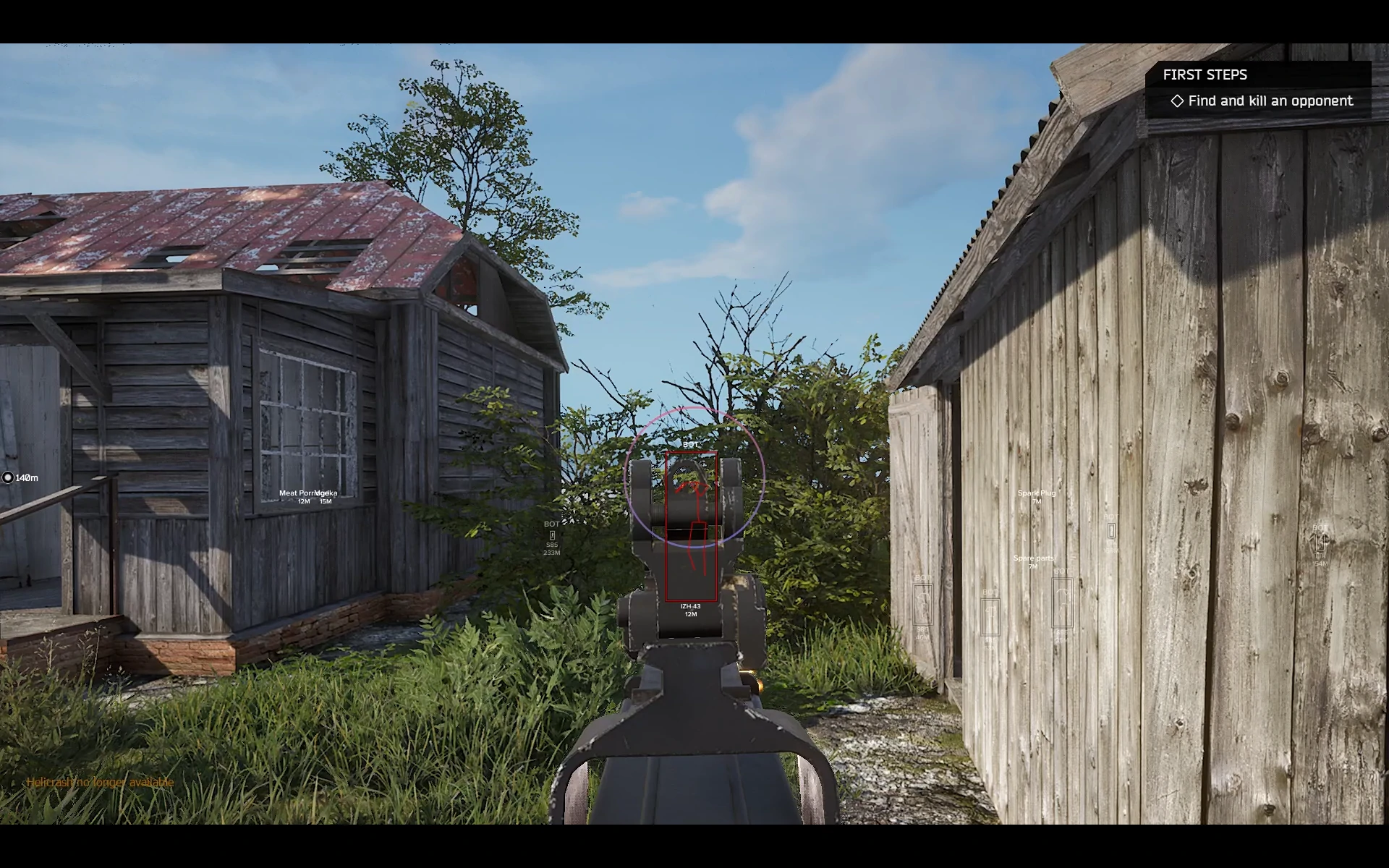
Deadside aimbot locks onto player and NPC targets with adjustable FOV, bone selection across head, chest, and pelvis hitboxes, and smooth aim that mimics natural mouse tracking. Bullet prediction compensates for travel time on weapons like the Mosin and M99 at extended ranges. All targeting bypasses BattlEye’s aim velocity monitoring through randomized micro-corrections.
You’re inside a hard-tier mini-bunker, two auto-turrets already down, and the melt-open crate is 15 seconds from popping. Three scavs spawn behind you in the corridor. Your Skar has 22 rounds left. You didn’t bring a backup weapon because you needed the inventory space for whatever the crate drops. Bone lock to chest, FOV at 40° to cover the corridor width, smooth aim at 65% — three scavs drop in four rounds, and you’re back facing the crate before the timer finishes.
Deadside Aimbot Settings — Matching Engagement Distance to Weapon Class
Deadside aimbot settings let you configure FOV, aim bone, smooth speed, and activation key independently for each engagement profile. The game’s weapon tiers span from the IZH-70 pistol at close range to the M99’s .50 BMG reaching across compound-to-compound sightlines — a single aimbot config doesn’t fit both.
Set FOV to 25–35° with bone lock on head for the M99. You’re already scoped, already tracking — the aimbot only needs to correct the last few pixels. That narrow FOV keeps the lock invisible on admin spectate because the correction looks like you dragged the scope manually. Widen to 60–80° for CQB inside Kamensk buildings where targets cross your screen from doorframes you weren’t watching. Chest lock, higher smooth speed. The AK-mod’s fire rate covers the rest.
Bullet Prediction and Travel Time Compensation
The Mosin and M99 have noticeable bullet travel at distances past 150 meters — enough delay that a running target shifts two body widths between trigger pull and impact. Bullet prediction calculates target velocity and weapon muzzle speed, placing the aimpoint where the target will be when the round arrives. This matters most during convoy events and helicopter crash sites where players sprint between cover across open ground.
Smooth aim at 55–70% keeps the correction curve within human reaction speeds. BattlEye tracks abnormal snap velocities — setting smooth too low produces a kill pattern that looks automated across enough engagements for the server-side stats to flag it. The sweet spot sits where the aim correction feels like a fast flick, not a teleport. That range changes slightly by weapon class: bolt-action rifles tolerate lower smooth values because one-shot engagements don’t generate the repetitive pattern that automatic weapons do.
The full feature breakdown for every weapon class is on the BurgerCheats feature list.
BattlEye handles aim detection differently across every title it protects. If you’re coming from DayZ’s BattlEye environment, the velocity thresholds and stat tracking behave similarly, but Deadside’s shorter average engagement ranges mean your smooth values need to sit higher than what works in Chernarus.

Deadside ESP — Every Stash, Scav, and Squad Across Mirny
You’ve hit the Airfield for the third time this session. The first two runs gave you a Skar, two magazines, and enough scrap metal to push Tier 2 reputation at the Quarry trader. You’re carrying 40K rubles worth of gear and you need to cross 800 meters of open ground to reach the northern Safe Zone. Somewhere between the treeline and the Quarry entrance, another squad is doing the same run in the opposite direction.
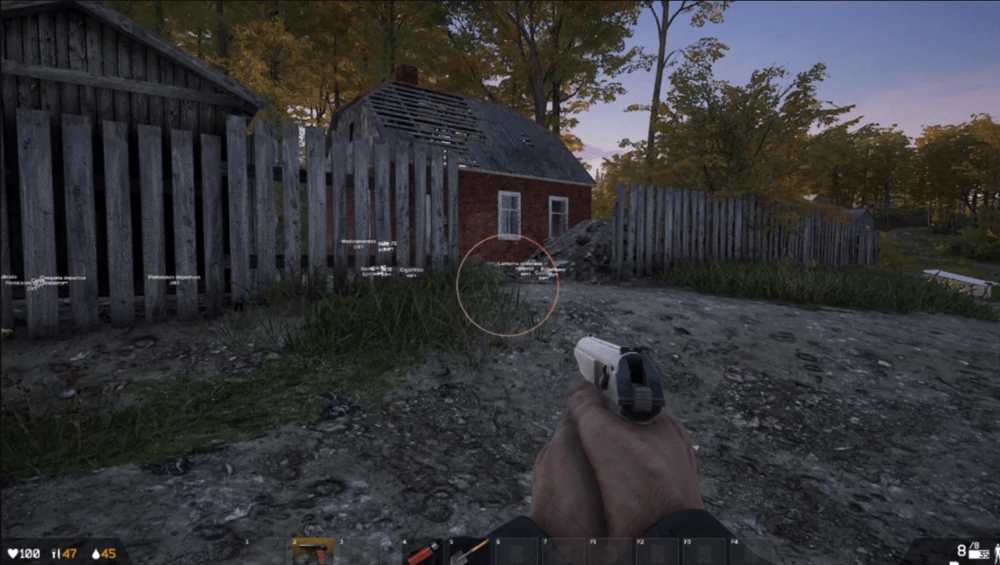
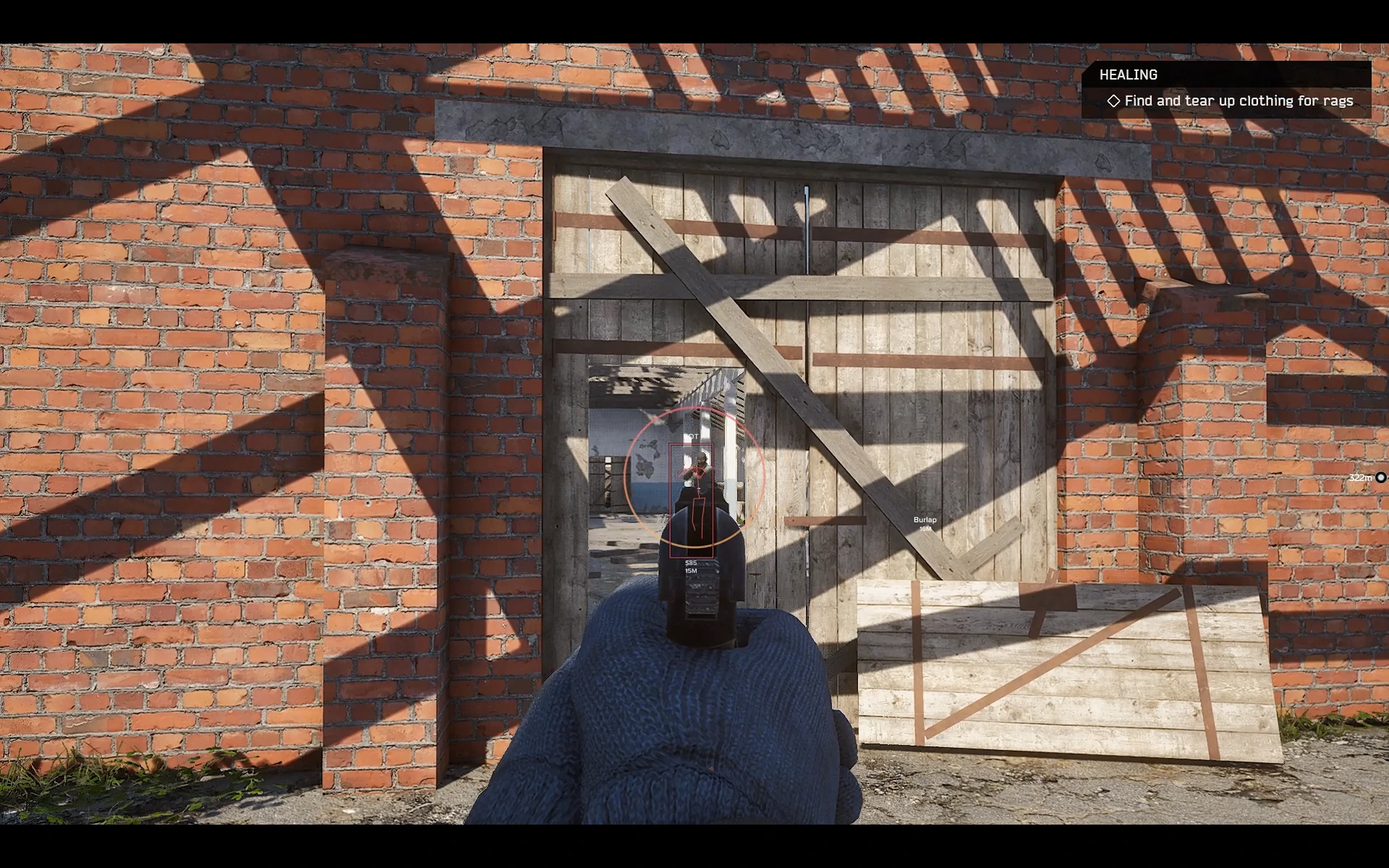
Deadside ESP overlays player positions, NPC scavs, loot containers, vehicles, and base structures through terrain and buildings across the full render distance of the Mirny map. Entity filters separate players from AI enemies, highlight military-tier weapon spawns over civilian junk, flag active auto-turrets inside mini-bunkers, and mark vehicles with fuel status. Distance readouts and health bars display alongside each entity.
You see the squad at 300 meters, moving northeast toward the same Safe Zone. Three players. Two carrying long rifles on their backs — visible through the weapon ESP tags. The third has no visible primary. You angle west, cut behind the industrial buildings, and reach the Safe Zone entrance from the opposite side. That three-player squad never saw you, and the 40K rubles in your stash stay there. ESP in survival shooters turns guesswork into information — SCUM’s open-world loot runs create the same kind of high-stakes movement decisions across large maps.
Loot Filter — Military Spawns vs Civilian Clutter
Mirny has hundreds of lootable buildings, and the majority spawn civilian-tier items you stopped needing after your first Safe Zone visit. The loot filter isolates Military and Ranger-tier spawns — the AK-mods, body armor plates, medical kits, and attachment modules that actually change your combat effectiveness. Civilian items disappear from the overlay entirely.
This matters most in Kamensk, the largest city on the map. Dozens of apartment blocks, each with lootable rooms across multiple floors. Running every room takes 25 minutes. Loot ESP with Military filter active cuts that to the 4–5 rooms that actually have something worth carrying. Your exposure time drops by 80%, and you’re out before the next squad arrives.
Player Tags vs Scav Tags — Knowing What You’re Walking Into
Entity filters separate human players from AI scavs with different overlay colors. Players show name, distance, health bar, weapon, and movement direction. Scavs show type and distance only — enough to know whether a mission zone is already cleared or still active. This separation matters at helicopter crash sites and convoy events where both players and AI converge on the same reward loot.
You’re approaching a crash site. Scav tags are still active — the event hasn’t been cleared yet. But two player tags sit motionless 60 meters east in the treeline. They’re waiting for someone else to clear the scavs and then push the loot. You know the play because you can see it. Back off, wait for them to commit, or circle behind their position. That decision doesn’t exist without entity separation.
How BattlEye Replaced EAC — And What It Changed for Every Bypass
BEDaisy.sys loads as a kernel driver before the game executable starts. It fingerprints your motherboard serial, CPU ID, storage drive serials, MAC addresses, and GPU vendor ID into a hardware profile tied to your game account. Every session, BattlEye cross-references this profile against a global ban database shared across every BattlEye-protected title — a hardware ban in Escape from Tarkov flags the same fingerprint when you launch Deadside.
BattlEye is a kernel-level anti-cheat that scans for injected code, unauthorized memory access, and suspicious driver signatures at Ring 0 — the same privilege level as your GPU driver. Deadside switched from Easy Anti-Cheat to BattlEye during a mid-cycle update, replacing EAC’s detection approach with BattlEye’s more aggressive memory scanning and global hardware ban database. Every bypass must operate below BattlEye’s kernel hooks to avoid detection.
Most competitor pages still list EAC as Deadside’s anti-cheat. That information is outdated. The switch changed the entire bypass architecture — tools built for EAC’s userland hooks don’t survive BattlEye’s kernel-level scanning. BurgerCheats’ bypass was rebuilt from the driver layer specifically for BEDaisy.sys, with same-day updates every time BattlEye pushes a signature refresh.
Cross-Title Hardware Bans — Why a Tarkov Flag Follows You Here
BattlEye’s hardware ban database is shared. A ban fingerprint from DayZ, Tarkov, Arma Reforger, or any other BattlEye title matches your machine the moment you connect to a Deadside server. New Steam account, new game license — doesn’t matter. BEDaisy reads the same hardware IDs and flags the match before you reach the main menu.
The HWID spoofer masks motherboard serial, CPU ID, drive serials, MAC addresses, and GPU vendor strings before BEDaisy.sys loads. Each spoofed session presents a clean hardware fingerprint that doesn’t match any entry in the global ban database. This is not optional for anyone who has ever been banned in any BattlEye game — without it, Deadside auto-bans on connection.
Check current compatibility and spoofer availability on the BurgerCheats status page.
Deadside Wallhack — Reading Kamensk Before You Enter a Single Room
Kamensk has over thirty enterable buildings across multiple blocks. You hear a single gunshot from somewhere in the eastern apartments — could be a player clearing scavs, could be a squad holding the rooftop with a VSD. You don’t know how many, what floor, or whether they’ve already cleared the loot you came for. Walking into that city blind means gambling every piece of gear you’re carrying on a coin flip.
Deadside wallhack renders player models, NPC positions, and loot containers through walls, floors, and terrain geometry across the Mirny map. Unlike ESP boxes that overlay tag information, wallhack shows actual character models and movement animations behind surfaces — giving directional facing, stance, and weapon-ready status at a glance without toggling any overlay menu.
You see three models inside the eastern apartment block. Second floor, stacked in one room. One crouched at the window, VSD shouldered — covering the street approach. Two standing behind interior walls, weapons lowered. They’re waiting for you or someone like you to walk into their sightline. You take the western route, enter from the building behind them, and clear the loot rooms they haven’t reached yet. Out through the south exit. They never moved.
2D Radar — 360-Degree Awareness Without Camera Rotation
The radar overlay projects a minimap centered on your position with real-time dots for players, scavs, and vehicles within configurable range. North-locked or rotation-locked modes give different tactical reads — north-locked for map orientation when navigating between landmarks, rotation-locked for directional combat awareness during firefights.
Radar fills the gap between wallhack and ESP. You’re in a firefight inside a mini-bunker — your camera is locked on the doorway ahead. Wallhack shows what’s in front. Radar shows the player flanking through the corridor behind you. Both tools at once give the full picture without needing to spin your camera during a fight where half a second of lost aim means a full inventory wipe.
Recoil Control from the AK-mod to the M99 — Every Weapon Class Flat
The AK-mod at full auto climbs four body widths in a 30-round magazine — rounds 1 through 8 land chest-level, rounds 9 through 20 drift above the head, and the last ten scatter across the wall behind your target. The MG-36 is worse. Its sustained fire kicks hard enough that a standing spray past 50 meters is a noise generator, not a weapon. Both guns have the damage output to dominate, but their recoil patterns punish sustained fire at exactly the ranges where sustained fire matters.
No recoil eliminates vertical and horizontal weapon kick with an adjustable intensity slider from zero to full compensation. Deadside’s weapon durability system means every missed round degrades condition faster for no return — no recoil keeps each bullet on target, extending effective weapon lifespan by reducing total rounds fired per kill.
Intensity Slider — Why 100% Is a Liability on Admin-Watched Servers
Setting no recoil to 100% produces a crosshair that doesn’t move during full-auto fire. On paper, perfect accuracy. In practice, any admin spectating your session sees a weapon with zero visual kick — and Deadside’s private servers have active admins who spectate reported players in real time.
Run intensity at 70–85%. The AK-mod retains a slight upward drift — visible, human, convincing on spectate — but controlled enough that every round in a 30-round spray stays inside the torso hitbox at 40 meters. The MG-36 at 75% intensity goes from unusable past 50 meters to consistent chest-level groupings through a full belt. Your kill speed doubles. Your weapon durability lasts twice as long because you’re not dumping missed rounds into walls.
Recoil control matters more in survival shooters where ammo and weapon condition are finite resources. Rust’s spray patterns follow a different model — learnable but punishing — while Deadside leans on random spread within a cone, making no recoil the more impactful tool here.
Durability Tax — How Missed Rounds Cost You More Than Ammo
Every round fired degrades weapon durability. The repair cost at a workbench scales with damage level — and the recent economy update made high-tier weapon repairs significantly more expensive. An AK-mod dropped to 14% durability costs more to repair than buying a replacement from the Tier 2 trader at the Quarry Safe Zone.
No recoil doesn’t just improve accuracy. It reduces total rounds fired per engagement, which directly extends weapon lifespan. A geared player carrying a Fasam at 750 RPM burns through condition in three extended fights without recoil control. With no recoil at 80%, every burst is shorter because every round connects — less total wear, fewer trips to the workbench, more raids before the weapon needs replacing.
Deadside Hacks — PvE Missions vs PvP Raids Configuration
You’re running missions on a PvE server — green triangles above every player, no raiding, no threat from other humans. The mission marker is 400 meters southeast, inside a compound guarded by eight scavs. Your config needs loot ESP active with the widest possible render range so you can sweep the compound for high-tier spawns after clearing the bots. Player ESP is irrelevant — nobody can shoot you. Aimbot FOV can sit wide and aggressive because the only targets are AI that don’t report you to admins.
Deadside’s three server types — PvE, PvP, and PvP Scheduled Raids — demand completely different feature configurations. The same tool suite running the same settings across all three creates unnecessary detection risk on PvP servers and leaves performance on the table in PvE. Configuration profiles let you switch between optimized setups per server type.
Switch to a PvP server. Everything changes. Player ESP becomes priority one. Aimbot FOV drops to 30–40° with smooth aim above 60% because human players report suspicious deaths and active admins spectate within minutes. Loot ESP filters tighten to Military-only so the overlay isn’t cluttered with civilian items while you’re scanning for threats. Radar moves from optional to mandatory.
Feature Setting PvE Config PvP Config Why Different Aimbot FOV 80–120° 25–40° AI scavs don’t report; PvP admins spectate snap-on kills Smooth Aim 30–50% 60–80% PvE speed kills; PvP needs human-pass tracking curves Aim Bone Head Chest Headshot-only streaks against bots look fine; against players they trigger reports ESP Filter All items + containers Military-only + players PvE needs full loot visibility; PvP needs clean threat overlay Player ESP Off or minimal Full (name, distance, weapon, health) PvE has no player threat; PvP survival depends on player tracking No Recoil Intensity 95–100% 70–85% No human spectators in PvE; PvP admins check weapon kick on replays Radar Off On (rotation-locked) PvE threats are visible ahead; PvP flanks come from behind Scheduled Raids Servers — The Config That Sits Between Both
PvP Scheduled Raids servers allow player combat at all times but restrict base raiding to configured windows — typically weekend evenings. Outside raid hours, you’re running a PvP config for movement and combat. During raid windows, you add base-specific overlays: Tool Cabinet locations, wall health indicators, and container highlights inside enemy structures.
Knowing which bases have Tool Cabinets with expired upkeep saves explosive charges. Dynamite and Explosive Charges are expensive to craft and impossible to buy from traders — spending them on a base that’s already decaying wastes resources you earned across multiple sessions. ESP highlights the Tool Cabinet status before you commit your raid tokens.
Staying Undetected on Private Servers with Active Admins
Staying undetected in Deadside requires bypassing two independent systems: BattlEye’s automated kernel-level scanning and the manual spectation by private server administrators. BattlEye detects injected code and abnormal memory patterns. Admins detect suspicious gameplay — unnatural aim snaps, impossible positioning, and kill patterns that don’t match human behavior. Both layers must be addressed simultaneously.
Kernel-Level Bypass — Operating Below BEDaisy.sys
The bypass loads before BEDaisy.sys initializes, establishing memory access at a privilege level BattlEye’s driver hooks cannot reach. Every time BattlEye pushes a signature update — which happens independently of Deadside’s game patches — the bypass requires matching updates. BurgerCheats ships these within hours, not days. The status page tracks current compatibility in real time.
Stream-proof rendering keeps the overlay invisible to screen capture, OBS, and Discord streaming. This also protects against admin screen-share requests — some private servers require players to share their screen during spectation. The overlay doesn’t render to the captured output.
Deadside Undetected Cheats — Surviving Admin Spectate on Private Servers
Deadside undetected cheats must pass both automated and human detection. Most bans on private servers come from admin spectation, not BattlEye flags. An admin watches your gameplay in real time after a player report. What they look for: aim snapping to targets through walls, crosshair tracking players behind cover, impossible reaction times, and headshot percentages that exceed human capability.
The configuration table above exists for this reason. PvP settings with high smooth aim, moderate FOV, and chest-bone targeting produce kill sequences that look manual on spectate. The aim correction blends into natural mouse movement. The bone target avoids suspiciously consistent headshot strings. The radar gives you information the admin can’t see you using — positioning decisions look like game sense, not external data.
Other BattlEye-protected titles like Hell Let Loose share the same dual-layer detection challenge. The techniques that keep you undetected in one BattlEye environment translate across the entire cluster — the anti-cheat is the constant, only the gameplay context changes.
Deadside Cheats — Getting Started Without Losing Your First Account
Your first session with any tool is the highest-risk window. Settings aren’t calibrated, you don’t know what looks suspicious on admin spectate, and a single overaggressive config choice can get your account flagged within an hour. Deadside’s full loot loss means a ban doesn’t just cost the game license — it costs every weapon, material stack, and base you’ve built across weeks of play.
The setup process loads the bypass before BattlEye initializes, configures feature profiles for your server type, and establishes the HWID spoofer if needed. First-session configuration should follow the PvE column of the config table above — start on a PvE server where there are no player reports and no admin spectation to learn the overlay, dial in aim settings against scavs, and switch to PvP only after you’re comfortable with the tool behavior.
The 4,900+ member Discord community is where most Deadside players share their config profiles and ask setup questions. Response time for technical issues runs under an hour during peak hours. The step-by-step setup process is documented and updated after every BattlEye patch cycle.
Feature details, current compatibility status, and pricing for every plan tier are available on the BurgerCheats product page.
Deadside Cheats — Frequently Asked Questions
My AK-mod is at 14% durability and repair costs more than buying a new one from the Tier 2 trader — does no recoil at lower intensity actually reduce how fast weapons degrade?
Yes. Weapon durability drops per round fired, not per kill. No recoil at 75–85% intensity keeps rounds on target, reducing total shots needed per engagement. An AK-mod that normally takes 12–15 rounds to down a geared player at 40 meters drops to 6–8 rounds with controlled recoil — roughly half the wear per fight. Over a full session with 10+ engagements, the durability difference is the gap between a repair and a replacement.
I run a Scheduled Raids server and raiding only opens Friday through Sunday — can ESP show which bases have Tool Cabinets with expired upkeep before the raid window starts?
ESP highlights Tool Cabinets and their placement radius. Bases with expired upkeep show visible structural decay — walls and doors degrade to lower material tiers. Combining ESP base structure highlighting with visual decay inspection identifies weak targets before you spend Dynamite or Explosive Charges. Upkeep status itself is server-side data not exposed to clients, but the visual indicators are reliable enough to prioritize targets.
The M99 costs over 200K rubles from the Tier 4 trader and only spawns at military compounds — if I catch a BattlEye ban, do I lose everything stored at both Safe Zone stashes?
A BattlEye ban locks your account permanently. All character data — including Safe Zone stash contents at both the Quarry and Bus Station, base ownership, trader reputation, and inventory — is tied to that account and inaccessible after the ban. The HWID spoofer prevents the ban from extending to your hardware, but a new account starts with zero reputation, zero stash, and Tier 0 trader access. Protecting the account protects every hour you’ve invested in progression.
My private server admin manually spectates anyone reported for cheating — does the overlay show up on the admin’s spectator camera feed?
No. Stream-proof rendering prevents the overlay from appearing in any screen capture method, including the admin spectator view, OBS recordings, Discord streams, and screenshot tools. The admin sees your standard game client — crosshair, HUD, weapon model — with no ESP boxes, no aimbot indicators, and no radar. The only detection vector through spectation is your gameplay behavior, which is why PvP config settings with high smooth aim and chest targeting exist.
I have a BattlEye HWID ban from DayZ on this machine — will Deadside’s BattlEye recognize the same hardware fingerprint even though it’s a completely different game?
Yes. BattlEye maintains a shared global ban database across all titles it protects. BEDaisy.sys reads the same hardware identifiers — motherboard serial, CPU ID, drive serials, MAC address — regardless of which game triggers the scan. A DayZ ban fingerprint matches when you launch Deadside, Tarkov, Squad, or any other BattlEye title. The HWID spoofer masks these identifiers before BEDaisy loads, presenting a clean fingerprint that doesn’t match any existing ban entry.
-
-
Total Members 5,000
-
Most Online 39
-
Newest Member johseff.johseff

-
-
Reviews
-

By Discord Review · Posted
+rep @admin really fast support and noce cutom service the delivery speed was fast he helped me with the settings you need to change an do and that in 10 min thats crazy. -

-

By 3ttuu · Posted
My firmware is working perfectly thanks to the kind explanations and help from the Burger Cheat admin. They were always very friendly and responded quickly to customers. If you're considering a purchase, I highly recommend it -
By Discord Review · Posted
+REP. The response was fast, the explanations were kind, and they answered my questions sincerely and thoroughly. It was excellent. -

-